CEPhaS Conservation Agriculture Perspectives – 5

CEPHaS 5

Conservation Agriculture Perspectives
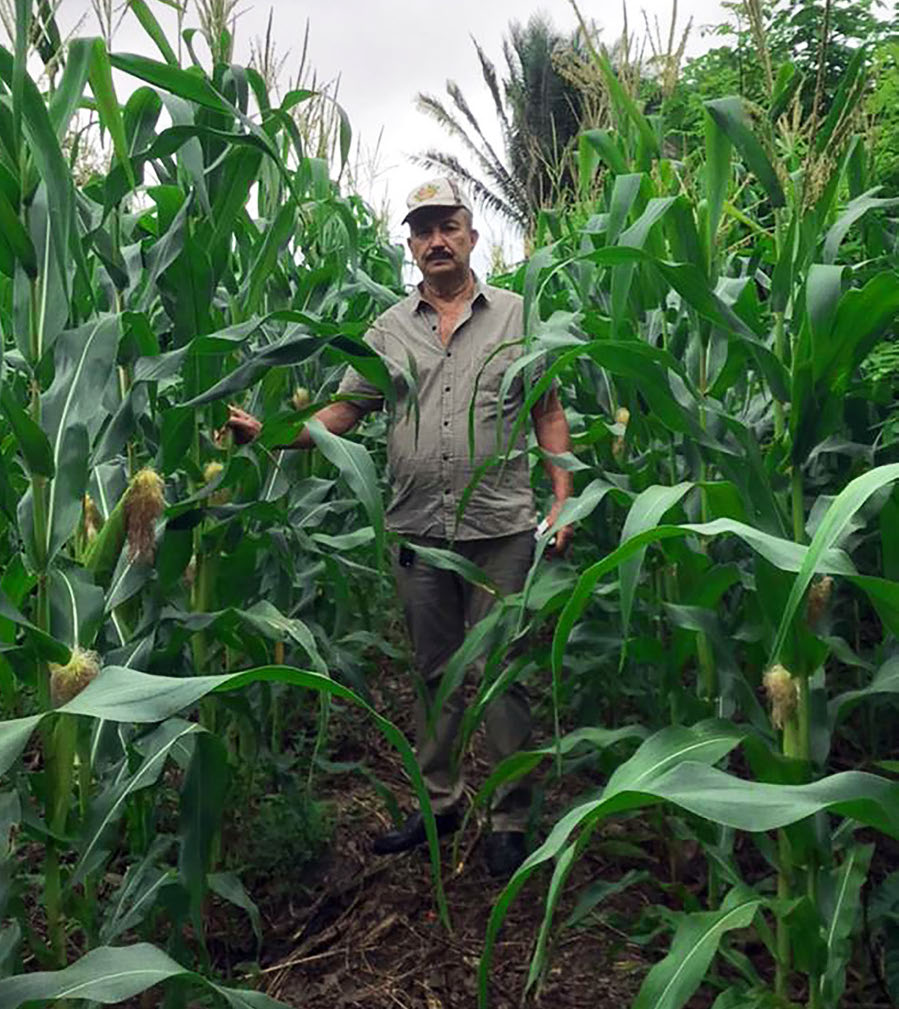
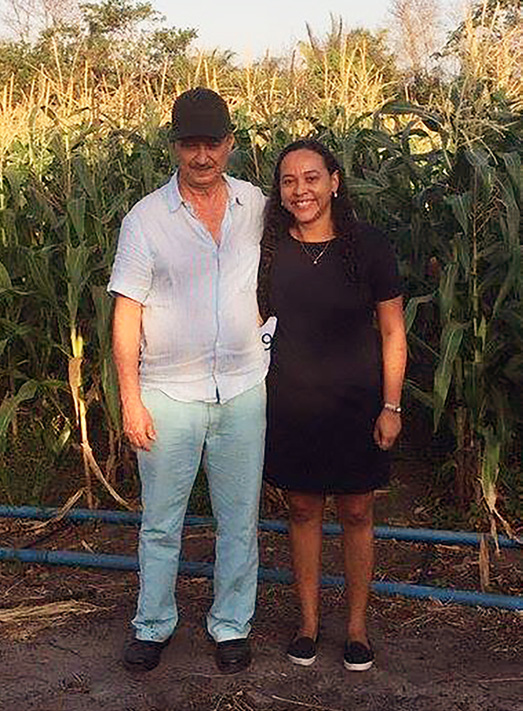
Professor Emanoel Gomes de Moura is professor in the Agroecology Post- Graduate programme at Maranhão State University in Brazil. He is a specialist in tropical agriculture with particular interest in low-fertility soils and the stabilization of soil organic carbon. Alana das Chagas Ferreira Aguiar is also a professor at Maranhão State University where she works on ecological intensification and nutrient cycling, working with family farmers. They have both been collaborating with Professor Sacha Mooney (University of Nottingham, and CEPHaS project) to examine and demonstrate the benefits for soil quality and crop production of systems which combine grazing livestock, trees and crops as an adaptation to climate change. Here they tell us more about the systems they are studying, an interesting contrast with the conservation agriculture methods which CEPHaS is examining in Africa, but with some common features.

1. What are the main ways in which you have seen farmers adapting to climate change in Brazil in recent years?

  • The principal strategy used by large-scale farmers to adapt to climate change in Brazil is the integrated agri-silvo-pastoral system also named low- carbon agriculture. This system comprises planting eucalyptus rows at wide spacings between crop strips intercropped with grass. This increases organic inputs to the soil, building the soil carbon stock and with it soil fertility and structural stability.
  • At the family farm scale, we have recommended an integrated-alley-crop- livestock-system. This system takes advantage of fast-growing leguminous tropical trees which produce high quality biomass which is used to increase and maintain soil organic matter in soil. Zero till is almost always used, although farmers sometimes abandon it because of problems with weed control. Maize — Soybean rotations are used, mainly to reduce root diseases.

2.  In what sets of circumstances (biophysical, socio-economic etc) are conservation agriculture practices most likely to be beneficial to rural communities, and in what circumstances are they least likely to be useful?

Conservation agriculture practices are most likely to be beneficial to rural communities when family farmers have at their disposal, technologies, and systems to replace unsustainable models like shifting cultivation systems where land is brought into cultivation, and then abandoned to fallow after a few years. Establishing alternative and sustainable agricultural system

is heavily dependent on support of public decision makers and local government. Conservation agriculture practices fail in rural communities when they are not adequately supported through education and local technicians/agronomists.

3. What components of conservation agriculture systems are most problematic from the perspective of farmers?

We have found that many smallholder farmers in the Amazonian periphery view the greater complexity of the systems from conservation agriculture, like integrated-crop-livestock-systems, as a significant barrier to adoption. This highlights the need to improve how technicians and researchers engage with farmers. The substitution of simple low-cost systems like slash and burn with more complex and expensive ones such as no-tillage in alley cropping cannot succeed without efficient support by public agencies to overcome principal bottlenecks. Training in soil-crop management practices and increased understanding of the functioning of systems and their components, fertilizers, and soil amendments are needed urgently.

In addition to improving the dissemination of technology, efficient strategies to add value to the harvested product and to reduce the impact of costs of inputs on farmers’ evaluation of the system are needed.

4. What do you think should be priority research topics if agriculture in Brazil is to adapt to climate change and contribute to mitigation?

In tropical regions, climatic factors promote the loss of soil organic matter through fast decomposition, and the loss of fertility through leaching of nutrients. Unless this is countered by soil management, land degradation (and consequently shifting

cultivation) will occur. The continuous management of soil in the humid tropics requires soil organic matter accumulation and stabilization, increased retention of base cations in the root zone, and improvements to the soil structure. This requires approaches which do more than promote crop productivity in any one season, but which increase the stabilization of soil organic matter, and improve the cycling of nutrients to maintain fertility. The alley cropping system using leguminous trees that we have been using is one such option, but we need future research to consider others.
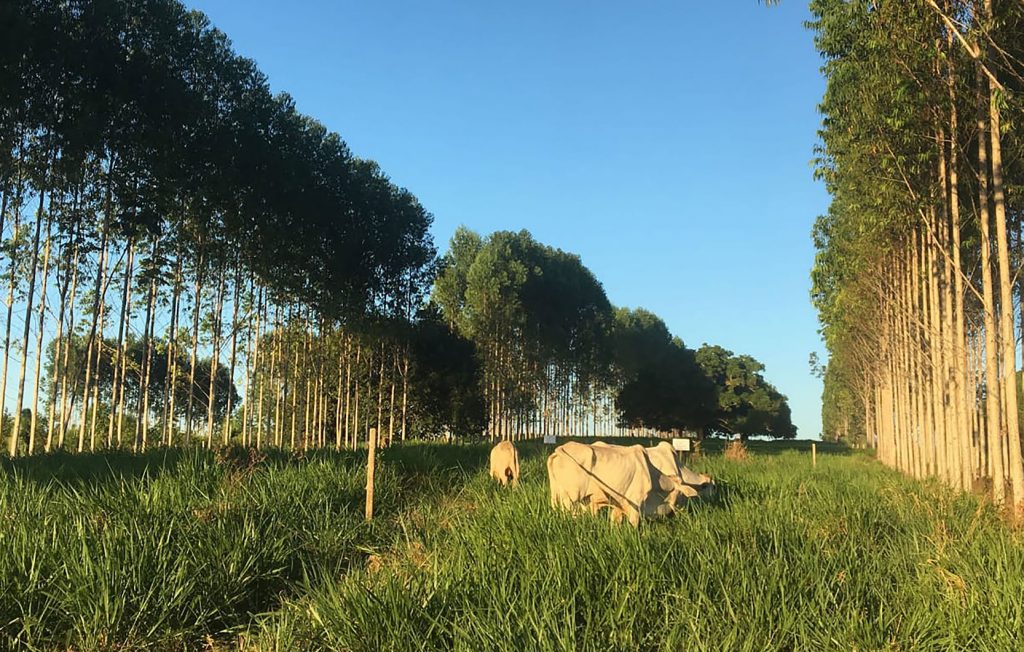
Integrated agri-silvo-pastoral system in an extensive farm in the Amazonian periphery.

To find out more, visit our webpages at www2.bgs.ac.uk/CEPHaS and follow us on twitter @CEPHaS_Soil


Unlocking Connectivity in Agricultural Supply Chains – Carolyn Baltz

SHI collaborates with The Sustainability Consortium (TSC) to drive action and innovation in sustainable practices. SHI invited Ms. Carolyn Baltz, the Senior Manager of Membership and Development at TSC, to address the 3rd Annual Meeting and provide a summary of activities.

TSC is a global, non-profit organization administered by Arizona State University and the University of Arkansas. TSC’s mission is to use the best sustainability science to help companies make everyday products better and more sustainable.

The organization enables members to actively participate in multi-stakeholder, science-based, business toolkit development and industry solutions through a pre-competitive approach. More than 100 organizations and 2,000 users contribute to the development and implementation of TSC materials.

According to Ms. Baltz, stakeholders work diligently to create category sustainability profiles that contain relevant information on hotspots, sustainability issues, opportunities for improvement, and key performance indicators. Ms. Baltz shared how these elements are used to develop customized tool kits for member businesses to execute sustainability practices within their organizations.


Turning Soil Health into $oil Wealth: Policy and Economics – Jim Jordahl

Dr. Jim Jordahl evaluates monetizing soil health from a land valuation perspective. Dr. Jordahl has more than 30 years of experience in farming operations, soil science, engineering, environmental science, and project management. Dr. Jordahl currently works with the Iowa Agriculture Water Alliance to increase the pace and scale of farmer-led efforts to improve water quality.

Dr. Jordahl said the date for a widely-accepted soil health metric is rapidly approaching. When that metric is accepted, a number of economic incentives will become apparent in the agricultural real estate marketplace. A metric on soil health that properly indicates increased agricultural productivity of a piece of property could encourage landowners to adopt and/or pressure property managers into adopting better soil health practices.


Microbial Physiology Regulates How Much Crop Residue Becomes Soil Organic Matter – Stuart Grandy

Dr. Stuart Grandy, Associate Professor at the University of New Hampshire, Department of Natural Resources and the Environment, pressed the audience to consider how the science behind soil health should progress and innovate.

Dr. Grandy described the process of how microbial cells promote biomass creation over time. He shared insight on how specific microbes are being studied and how differences in inputs figure into biomass creation. Dr. Grandy also explained results of cover crop studies.


Lessons Learned from 30 Years of SARE Farmer-Researcher Projects – Rob Myers

Dr. Rob Myers discussed farmer, rancher, and researcher interaction through the lens of grants and projects funded by Sustainable Agriculture Research and Education (SARE) programming during the last 30 years. Dr. Myers is the Regional Director of Extension Programs for the USDA-NIFA North Central Region, SARE.

Dr. Myers stressed the importance of integrating early and continuous input from farmers and ranchers on potential research projects. He also outlined methods and materials SARE uses for recruiting potential research partners.


Relaying Usable Research Results to Farmers – Diana Jerkins

Dr. Diana Jerkins, Research Director of the Organic Farming Research Foundation (OFRF), highlighted the importance of tailoring research information for specific audiences and individuals.

OFRF creates numerous materials to educate and communicate to farmers, including living documents, videos, and other materials that are updated as new research and information are released. Dr. Jerkins also discussed how the foundation engages and empowers farmers and ranchers in political arenas.


Communicating 4R to Farmers and Connecting On Content – Lara Moody

Ms. Lara Moody, Vice President of Stewardship and Sustainability Programs at The Fertilizer Institute (TFI), detailed how TFI condensed fertilizer best management practices into the 4R Nutrient Stewardship framework to achieve cropping system goals of production, profitability, environmental protection, and sustainability. (The 4R framework means the right fertilizer at the right rate at the right time and the right place.)

Ms. Moody shared responses to surveys conducted by TFI in which the 4R framework was discussed one-on-one with a wide-range of farmers. Overall, 4R awareness, favorability, and farmer likelihood to try new practices increased during the survey as respondents learned more critical information.