Soil health assessments are an important part of the farming toolkit and usually involve taking soil samples and sending them to be evaluated by a lab. Each sample captures a snapshot of how healthy your soil is at that moment in time, so you want to make sure the moment that you pick will give you the most useful information.
To make the most of your sampling efforts, it helps to think about timing in a few different ways. Timing within crop rotation, time of year, and the timing after weather events, as well as tillage or other management, can all affect your results. The following timing recommendations will help you get the most useful soil health information from your sampling efforts but remember: the best sample timing is the one you take!
Where you are in your rotation
In any given year, you might have fields that you’d like to sample that have different crops planted in them. Each crop and how it’s grown can have different effects on the health of your soil. As an example, if you have two fields next to each other, both in an alfalfa-corn silage rotation, and one is in its third year of alfalfa this year and the other is in corn, one may have greater soil health indicator values than the other simply because of the crop rotation you’re sampling. If you want to compare soil health between fields, keep comparisons to fields with similar crops at sampling to minimize any effects on soil health due to crop rotations.
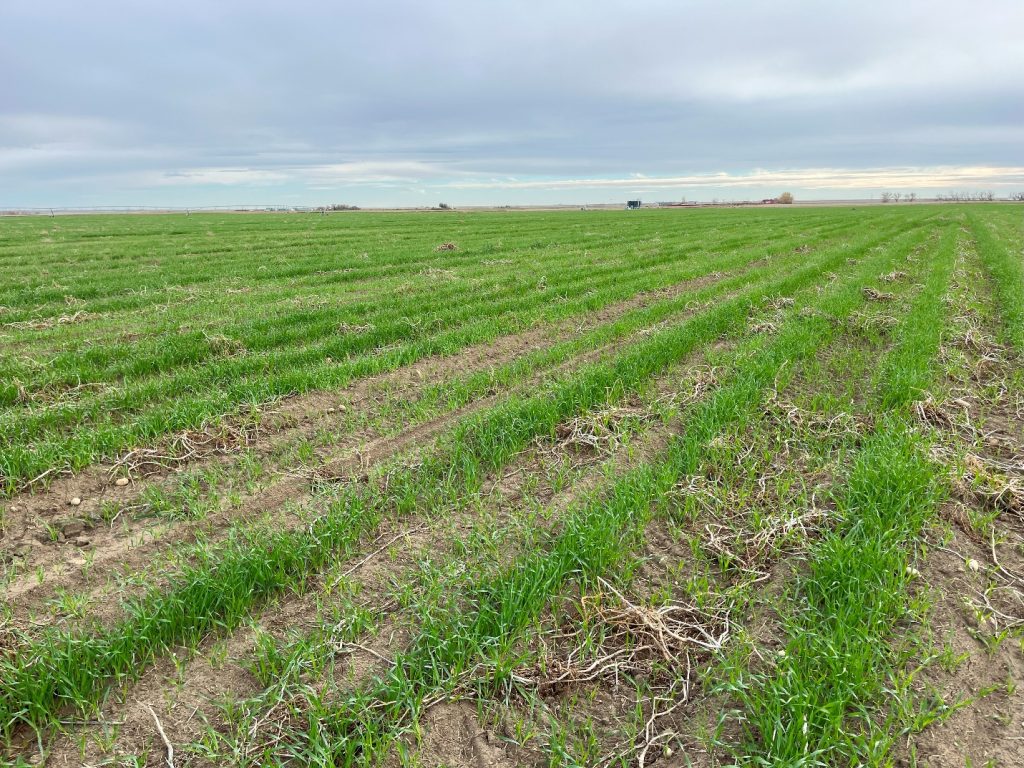
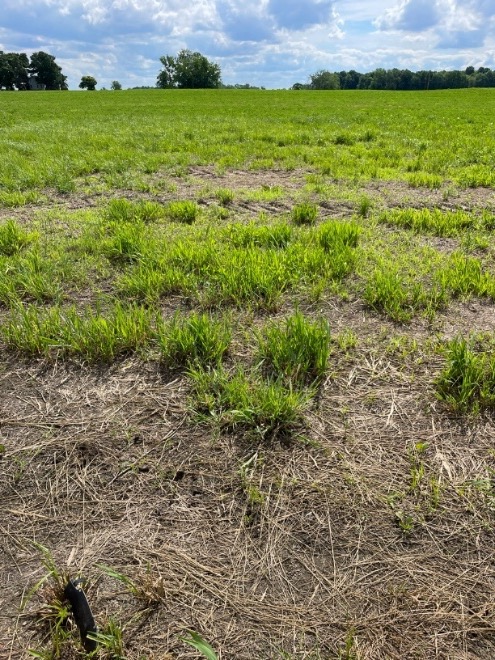
When you sample during the crop rotation matters. The wheat field in the background and the alfalfa field in the foreground will likely have different soil health values if sampled at the same time, as they are at different points in the rotation.
Time of year
Take all your samples around the same time of year if possible. It is best practice to keep sample collection within a four-week window of each other. Collecting samples at the same time reduces natural seasonal effects, making management-related differences easier to detect.
Soil microbial activity is often lowest in the coldest or driest months, so samples collected during these periods will generally have lower carbon mineralization values compared to samples collected during warmer, wetter months. As a starting point, SHI recommends sampling in the spring after winter crop termination and before planting cash crops. If that timing doesn’t line up with your operation, sampling four weeks after planting cash crops also works well. This timing is a good balance of logistics and optimal levels of biological activity. You could also sample in the fall after harvest and before any fall tillage occurs; this is likely the best timing if you are sampling a crop like potato, where field preparation and fumigation may occur the fall before planting. If you’re already out there taking soil fertility or soil pathogen samples, that’s a perfect opportunity to add some soil health samples!
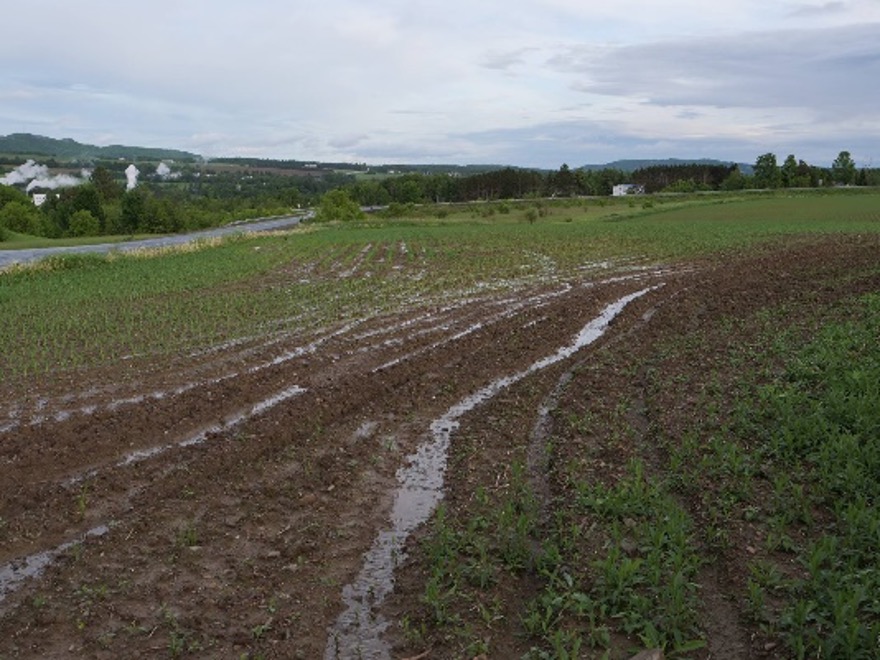
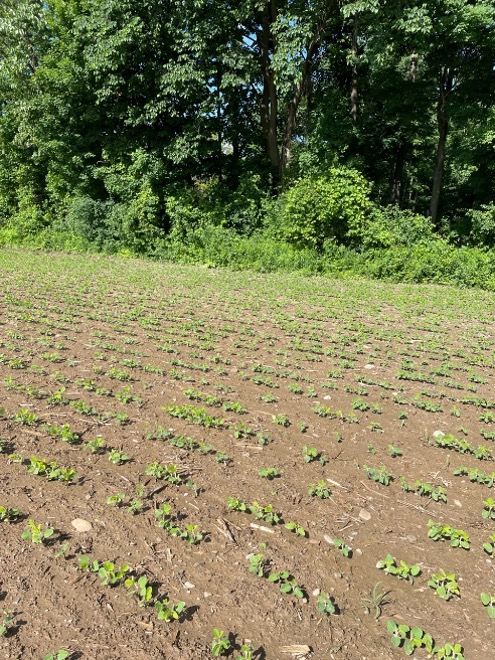
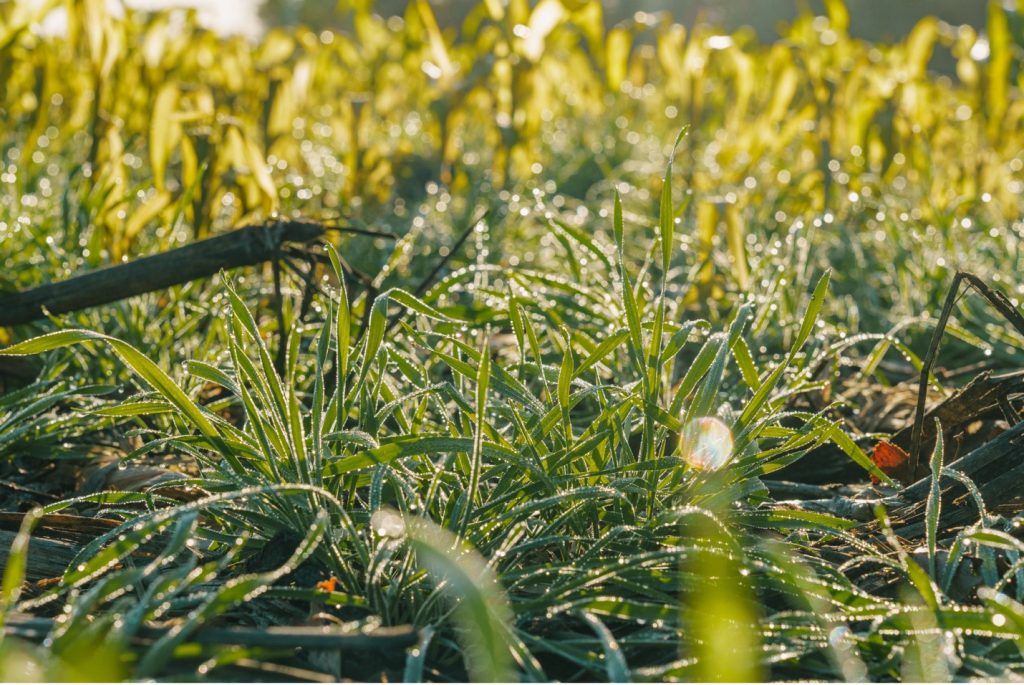
Time of the season is important for soil health sampling. Try to take samples when soil is relatively undisturbed; that might be before tillage and planting in spring, or starting four weeks after planting, as shown here.
Timing relative to management and environment
As much as you can plan to do your sampling on a particular date, weather and logistics will likely change when you can sample. Depending on field management and the environment (rainfall and tillage especially), you might want to move your sampling by a few days or weeks. Avoid sampling when fields are extremely wet or dry. This is not only because it can be physically difficult to sample, but also because soil health measurements can be affected by soil moisture. It’s best to take samples at a time where soil moisture is closer to average for that field. Tillage or any other soil disturbance can also affect soil health measurements. A good guideline is to wait two weeks after a soil-disturbing event to take any soil health samples.
What if I only plant highly disturbed crops? Should I even bother?
Yes! Soil health is relative to the cropping system and environment. You can still see differences in soil health when sampling in a root crop, for example, it might just have lower values for soil health than a less-disturbed crop on the same soil. The key is keeping your sample timings as consistent as possible to the most reliable data for you to use in your operation.
Conclusion
Soil health measurements are only as good as the sample you take, but the best sample is the one that you actually collect! These timing considerations can help you get the most useful and usable data as you continue your soil health journey.
Want to know how to choose a location for sampling? Check out our blog on 6 mistakes to avoid.
For more information on soil health, reach out to our educators.
This article is made possible by the Advancing Markets for Pacific Northwest Potatoes, Industrial Hemp, and Commodities from American Indian Reservations Project, a partnership led by Dr. Jeff Steiner at Oregon State University and funded by the USDA-NRCS. For more in this series, visit our YouTube channel.
More than 1,000 registered attendees representing 75 countries and 780 organizations participated in the Soil Health Institute’s 10th Anniversary Meeting in December, signaling the soil health movement’s journey from niche to norm.
With panel discussions and presentations covering farmers’ experiences, recent research, new tools, and best practices, the event convened farmers, ranchers, landowners, and those in academia, industry, government, nonprofit, philanthropy, and other sectors invested in soil health, the foundation for regenerative agriculture.
Along with SHI experts, panelists included USDA-NRCS Chief Aubrey J.D. Bettencourt, Bezos Earth Fund’s Future of Food Director Andy Jarvis, and Field to Market President Carrie Vollmer-Sanders, among many others.
Carrie Vollmer-Sanders moderates the panel “Engaging Brands and Organizations for Scaling Soil Health Systems” at SHI’s 10th Anniversary Meeting.
A poster session showcased research from students, academics, and industry professionals, with Hannah Frank, Gustavo Camargo Silva, and Poonam Karki taking the honors in the student poster competition.
Potato growers across North America face a delicate balance when it comes to protecting soil health and growing a profitable crop. The soil needs to be worked to form hills for potato planting, which prevents greening and reduces misshapen tubers, and to harvest the crop at the end of the season. But too much soil disturbance leads to issues with erosion, compaction, nutrient losses, and declining soil organic matter, jeopardizing the land’s long-term health and productivity. Thankfully, there are examples of innovative strategies that demonstrate how this delicate balance can be achieved. In this article, we explore scalable strategies to minimize soil disturbance in potato production, drawing from published research and first-hand grower accounts. Implementing these strategies on different potato operations calls for curiosity, adaptability, and site-specific knowledge. Every operation has unique soils, climates, equipment, and available markets, meaning different approaches may be needed to reach soil health goals.
In-Field Soil Health Diagnostics
Before implementing a new strategy, it helps to understand how the soil is currently functioning and where it could be improved. Some signs of soil health are visible from the road; other times, it takes a shovel, a smartphone, and a closer look.
Here are three simple ways to get a read on soil health in the field:
Aggregate stability: Aggregates, those small clusters of soil particles, are the backbone of good soil structure. Healthy aggregates are rounded and hold together in water. Aggregates from less healthy soils crumble and slake, a sign that the soil is more prone to erosion and poor water infiltration. Try the free Slakes smartphone app to test aggregate stability in the field.
Root growth: Roots don’t lie. In healthy soil, they grow deep and straight. In compacted soil, roots can end up growing sideways or bunching up as they meet compacted layers. The same is true for water. If it can’t move through, it will pond or run off. Use a shovel, screwdriver, or metal rod to test for resistance at 6-12 inches deep.
Water infiltration: Soil that can’t absorb water can’t support healthy crops. After a heavy rain or irrigation, watch how long it takes for the water to disappear. If there is standing water hanging out more than 24 hours later or if runoff channels are visible, there is a water infiltration issue.
These field-based observations are just a starting point. You can find more in our guide to in-field soil health indicators.
Once you know what you want to achieve in terms of soil health, you can start looking at strategies to address it. Because farming systems are dynamic and complex, it’s unlikely that a single practice will solve any one problem or work on all soil types in all regions. Explore a few practices that address different aspects of soil health, like soil structure, soil biodiversity, and soil organic matter.
Strategies from Research
Here are several studied strategies for keeping the soil where it belongs.
Single–pass planting and hilling: It’s common in potato production to plant and form the final potato hill in separate passes. Rees et al. (2011) found that combining planting and hilling into a single pass reduced soil loss by 40%, lowered fuel costs, and improved water retention. Growers considering this practice should ensure proper planter and hiller alignment to avoid uneven ridges.
Adjusting tillage timing: Fall tillage leaves soil exposed in winter, increasing erosion risk. In some cases, shifting primary tillage from fall to spring can keep the ground covered to protect soil over the winter without reducing potato yields the following year (Griffin et al., 2009).
Dammer diking: Research on Prince Edward Island demonstrated that dammer diking—creating pockets in the furrows—reduced water runoff and encouraged water infiltration (Gordon et al., 2011). While being a form of soil disturbance, this provides other soil health benefits in terms of water infiltration.
Cover crops: Cover crops can be incorporated into potato rotations to protect soil between growing seasons. Studies in Eastern Canada found that winter cover crops planted after potato harvest reduced erosion by nearly 60% (Nyiraneza et al., 2020). However, late-season potato harvest limits cover crop establishment, requiring creative approaches like interseeding before harvest or nurse cropping at potato planting (Jemison, 2019). Overall, cover crops armor the soil, reduce erosion, improve microbial diversity, and enhance soil structure through their rooting systems (Ghosh & Daigh, 2020).
Reducing tillage in rotation years: Studies have shown that reducing tillage in non-potato years can improve soil organic matter levels and water infiltration (Rees et al., 2014). Hills et al. (2020) reported that eliminating three tillage passes in a potato-sweet corn-sweet corn rotation reduced soil erosion and increased profitability due to reduced fuel and labor costs.
Grower Innovations
Farmers are often ahead of the curve with testing, adapting, and proving ideas in their fields long before they appear in the research literature. Two growers in Canada, Chad Berry and Alison Davie, push the boundaries of what is typical for their region, one through single-pass hilling and planting, and the other by significantly reducing the use of power hilling. Each approach reflects a thoughtful balance between efficiency and innovation, offering a glimpse into the creativity and problem-solving that defines growing potatoes today.
Less disturbance, more residue
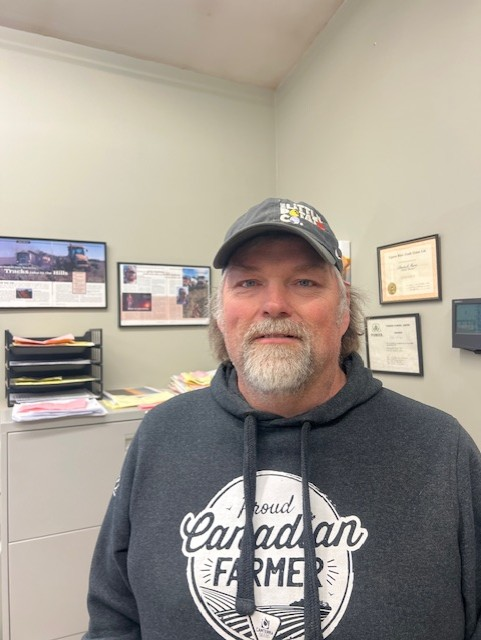
On the light sandy loam fields that Chad Berry farms in Manitoba, Canada, keeping soil in place is a yearly battle. A three-year mixed grain and potato rotation with minimum tillage on the grain fields helps him combat blowing soil.
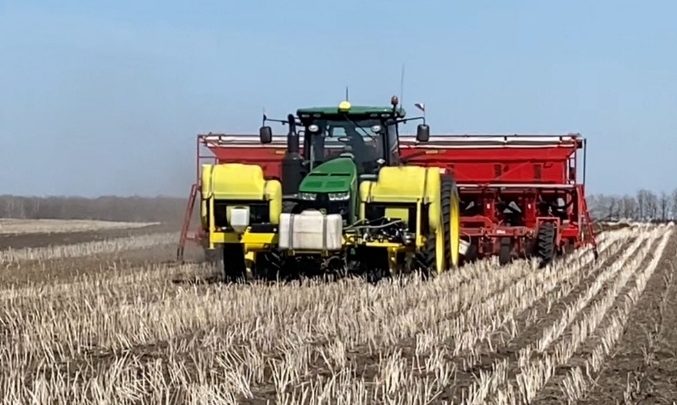
Chad successfully implemented a one-pass planting and hilling system for potatoes without any prior soil preparation, reducing soil disturbance and retaining some residue on the surface while the crop gets established. “When we plant potatoes, we know there will be four to five weeks of black dirt before emergence. Anything that we can leave out there to keep the dirt from moving helps a lot.”
Berry points out that erosion isn’t just about soil loss—it impacts crop health, too. “We’ve cleaned up so many fencerows where the soil blew away,” Chad recalls. “That’s organic matter and nutrients leaving the field. And when young potato plants get sandblasted by wind, it creates openings for disease. We see better disease resistance in fields where the soil stays put.”
Chad has also worked a lot with cover crops, particularly after harvest. Now, he’s considering planting covers at the same time as potatoes, as what some may call a nurse crop. “Some growers are trying it, and it looks good. Having green material growing early could help shade the soil and prevent soil overheating,” he says.
For those thinking about making similar changes, Chad advises starting small. “I wouldn’t do everything at once. Try a few patches and see what works,” he says. “So much depends on soil texture and weather. Every field is different, but if you keep making small improvements, it adds up.”
Rethinking the power-hiller
In southern Alberta, power-hilling is a common practice. A power-hiller is effectively a large rototiller that reshapes the soil into neat, fluffy hills. Many growers use a power-hiller to create a uniform seedbed and break down any soil clods that risk being dug up with the potato crop at the end of the season. But for Alison Davie, a potato grower in the region, power-hilling is more of an exception than a rule.
“We don’t use it as a matter of practice,” Davie explains. “Only if the field requires it.” Instead, Alison leans on the natural freeze-thaw cycles to do the work over the winter. Over the years, she has run side-by-side comparisons, weighing the results of the power-hilled fields versus those left.
“We don’t own a power-hiller, and we’ve farmed this way for years,” she shares. “I’m not opposed to using one under certain conditions, but I don’t think it needs to be an every-year, every-field thing.”
Alison brings the same thoughtful trial-and-error approach to cover cropping. She has tested several approaches over the years with mixed results. One method that has worked well is broadcasting barley just ahead of potato harvest. “If we harvest potatoes before September 20, we’ve had good success with barley coming up between the vines,” she says.
But she has stayed realistic about cover crops. “I would love to say let’s put cover crops on everything, but there’s a financial cost and logistical side to that. It doesn’t always make sense,” she says. She has also experimented with winter wheat, pushing the seeding window with varying outcomes. “That’s farming. You look at why it failed. Was it the weather? The seeding rate? And you adjust.”
Through it all, Alison continues to learn, not just from her field but from her peers, too. “Even reaching out on social media,” she says. “It’s amazing how many farmers are willing to share their experiences.”
By choosing when to power-hill and when and where cover crops make sense, Alison demonstrates a thoughtful, practical approach to soil management, one that prioritizes minimal disturbance and demonstrates an integrated approach to keeping the soil where it belongs.
Anticipating Challenges
Even the best-laid plans can run into trouble once the tractor hits the field. That’s why it’s important to troubleshoot before challenges arise. One useful approach is the “pre-mortem.” Instead of waiting to assess what went wrong, a pre-mortem starts from the assumption that a plan has failed and then works backward to identify potential causes. This exercise can reveal design flaws early and create space to build smarter, more resilient strategies. It’s not about pessimism, it’s about preparedness.
Here are a few challenges that growers may face when trying out new strategies.
Compaction: Potato growers often face a challenging cycle: Wet field conditions during critical operations with heavy equipment can lead to compaction. Introducing cover crops can counteract this issue by improving soil structure and adding organic matter over time (Mundy et al., 1999). Many regions have Cover Crop Councils that provide guidance on species and characteristics.
Penalties from the processor: Many processors impose financial penalties for soil clods and residue in shipments, which can incentivize more tillage. Monitoring soil conditions post-harvest and evaluating whether clod breakdown really necessitates additional passes can save fuel, labor, and soil structure. Where residue decomposition is slow, encourage strategies that stimulate microbial activity, like cover crops and organic amendments, to facilitate faster breakdown.
Narrow cover crop window: Processing varieties often have a long growing season, limiting the post-harvest window for cover crop establishment. Interseeding before harvest and relying on digging operations to incorporate seed can offer a creative workaround. Ensure to match species and timing to local conditions to ensure effective establishment.
Of course, not every season will go perfectly, and that’s okay. Small refinements in timing, equipment, and working around weather constraints can make a difference without requiring a full system change. Treat each season as an opportunity to learn and adapt. When introducing new practices, it is often best to start small. A gradual rollout across test strips or individual fields allows growers to track performance and troubleshoot issues before scaling up. Accurate records, such as planting dates, yield, irrigation, and rainfall, are essential for assessing outcomes and guiding future improvements. To support adoption, it is also worth exploring USDA-NRCS conservation programs that help reduce upfront costs. Advisors play a key role in helping growers navigate funding requirements, including specific seeding windows, termination protocols, and documentation needs.
Looking Forward
Potato systems won’t look like corn and bean systems, and true no-till potatoes aren’t on the table. But as growers like Chad and Alison have shown, even small adjustments, whether it’s refining tillage timing, experimenting with cover crops, or integrating less disruptive practices into rotation years, can have a measurable impact on erosion, water retention, and overall crop resilience.
There’s no universal blueprint for caring for the soil. But by drawing on experience from other growers and agronomic research, growers can find realistic, site-specific, and scalable ways to improve soil health. The future lies in steady, informed progress, one thoughtful decision at a time.
This article is based upon work supported by McCain Foods North America through the regenerative agriculture education program with the Soil Health Institute.
Find videos, blogs, and contacts on soil health in potatoes, search your location on our Resources page.
References
Chen, D., B.J. Zebarth, C. Goyer, L.-P. Comeau, K. Nahar, and T. Dixon. 2022. Effect of biofumigation on population densities of Pratylenchus spp. and Verticillium spp. and potato yield in eastern Canada. American Journal of Potato Research 99:229-242.
Ghosh, U., and A.L.M. Daigh. 2020. Soil compaction problems and subsoiling effects on potato crops: A review. Crop, Forage & Turfgrass Management 6:e20030. https://doi.org/10.1002/cft2.20030.
Gordon, R.J., A.C. VanderZaag, P.A. Dekker, R. De Haan, and A. Madani. 2011. Impact of modified tillage on runoff and nutrient loads from potato fields in Prince Edward Island. Agricultural Water Management 98:1782-1788.
Griffin, T.S., R.P. Larkin, and C.W. Honeycutt. 2009. Delayed tillage and cover crop effects in potato systems. American Journal of Potato Research. 86:79-87.
Hills, K., H. Collins, G. Yorgey, A. McGuire, and C. Kruger. 2020. Improving soil health in Pacific Northwest potato production: A review. American Journal of Potato Research 97:1-22
Jemison, J.M. 2019. Use of nurse crops in potato production to protect soils from erosion. American Journal of Potato Research 96:13-20.
Khakbazan, M., R.M. Mohr, J. Huang, E. Campbell, K.M. Volkmar, D.J. Tomasiewicz, A.P. Moulin et al. 2018. Economic and risk effects of rotation based on a 14-year irrigated potato production study in Manitoba. American Journal of Potato Research 95:258-271.
Molina, O.I., M. Tenuta, A. El Hadrami, K. Buckley, C. Cavers, and F. Daayf. 2014. Potato early dying and yield responses to compost, green manures, seed meal and chemical treatments. American Journal of Potato Research 91:414-428.
Mundy, C., N.G. Creamer, L.G. Wilson, C.R. Crozier, and R.D. Morse. 1999. Soil physical properties and potato yield in no-till, subsurface-till, and conventional-till systems. HortTechnology 9(2):240-247
Nyiraneza, J., B.J. Zebarth, S.A.E. Fillmore, M. Khakbazan, S.W.R. Hann, and J. Owen. 2020a. Enhancing environmental performance with winter cover cropping after potato harvest in eastern Canada. Communications in Soil Science and Plant Analysis 51:1499-1513.
Rees, H.W., T.L. Chow, B.J. Zebarth, Z. Xing, P. Toner, J. Lavoie, and J.L. Daigle. 2011. Effects of supplemental poultry manure applications on soil erosion and runoff water quality from a loam soil under potato production in northwestern New Brunswick. Canadian Journal of Soil Science 91:595-613.
Rees, H.W., T.L. Chow, B. Zebarth, Z. Xing, P. Toner, J. Lavoie, and J.L. Daigle. 2014. Impact of supplemental poultry manure application on potato yield and soil properties on a loam soil in north-western New Brunswick. Canadian Journal of Soil Science 94:49-65.
As interest in soil health increases, more growers and land managers are turning to soil health assessments to understand what’s happening beneath the surface. But the value of any soil health test is only as good as the sample you collect.
So how do you pick which fields to sample and where? A good first step is to consider what questions you are trying to answer about your field’s soil health. It might be to see the current status of your soil health, to monitor a single field to see how your soil health is changing over time, or to compare two similar fields under different management.
In all of these cases, pick a spot that:
is representative of the field. Select a sample location that has similar soils and environment to the rest of the field. This way, our testing results will be most applicable to the field as a whole.
you can sample across multiple years. Improvements might be small at first. Sampling the same point each time helps detect changes in soil health indicators as early as possible, and those changes are most likely from your management choices and not natural in-field variability.
Here are six pitfalls to avoid if you want your soil health data to reflect what’s happening in your fields.
Recently Disturbed Soil
Try not to sample fields that have had the soil disturbed in the last two weeks, whether that’s tillage, harvest or planting for root crops, soil fumigation, or any other soil-disturbing activity. Soil health indicators are highly influenced by the soil being disrupted, so it’s best to wait until they have reset. If a disturbed area is your only option, make a note of it when you sample. It might help down the road!
Compacted or Eroded Areas
Avoid any compacted spots in your field, like wheel ruts, driving paths or walkways,and eroded areas, like gullies or rills where water tends to move through a field. This is mostly a warning for specific areas of compaction or erosion; if the entire field is compacted, then compacted soil is representative.
Field Edges
“Edge effect” is a real thing, where the edges of a field have a different environment than the interior of the field, and that could make a difference in your sample values. Make sure to walk into the field a few rows before sampling.
Low/High Points
These tend to be more extreme than more intermediate points in the field which are a better representation of the field at large. For example, low points might be prone to flooding, where high points might be drier or more eroded.
Too Wet or Dry
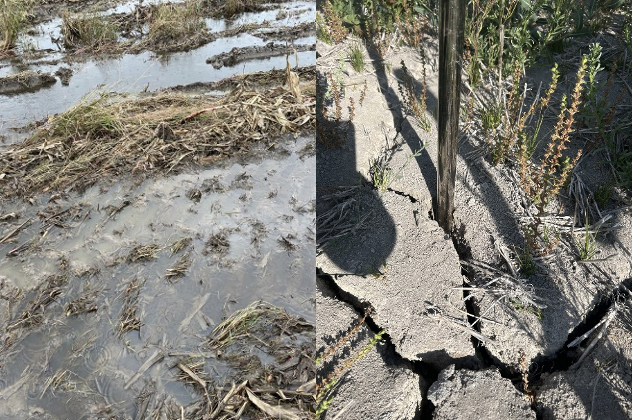
It can be difficult to sample in muddy or waterlogged soil. If it’s rained or been irrigated recently, wait a day or so to let the field dry out before sampling. At the other extreme, in dry regions or in soils that dry out easily, it can be like trying to sample concrete when soils are dry. You might need to time your sampling during a period where irrigation or rain has happened more recently. Soil moisture content can also affect some soil health indicator values, so try to take samples when soils are at a more intermediate level of soil moisture. Another reason to avoid soils that are too wet or too dry is that we want to measure changes from management, not weather. For example, if you sampled during a drought year and sampled again in a year with normal rainfall, you might be picking up changes from differences in water availability, rather than any management you might be doing. This one might be unavoidable in some cases, so it’s a good idea to keep extreme weather conditions in the back of your mind when looking at your soil health data.
Inconsistent Crop Growth
Avoid spots where crop growth is visibly stunted or inconsistent. There are many reasons why a crop could perform poorly, but there could be some aspect of soil health that is affecting or is affected by whatever is causing crop decline. Caveat: if you are looking at soil health specifically to get information on your soils where you have stunted crops, then you should pick a representative spot within that stunted area.
Exceptions
Do your best to avoid these pitfalls, but, of course, there might be reasons to not strictly follow this guidance. For instance, if you have an area of low productivity in the field and you want to know what’s lacking there, then you might compare a sample from that area to a sample from an area in the field with higher productivity. If you do have to take a sample that varies from this guidance, make a note of what and why – that information can come in handy when trying to make sense of your soil health data down the line.
Avoiding these pitfalls can help you collect the best information to support your farm and soil health journey. For more information, reach out to one of our soil health educators for information targeted to your region.
This article is made possible by the Advancing Markets for Pacific Northwest Potatoes, Industrial Hemp, and Commodities from American Indian Reservations Project, a partnership led by Dr. Jeff Steiner at Oregon State University and funded by the USDA-NRCS. For more in this series, visit our YouTube channel.
A new study shows that soil health management techniques have consistently improved soil health on six million acres across seven regions of the Southern United States.
The study by the Soil Health Institute looked at the effects of soil health practices on three essential indicators: soil organic carbon, aggregate stability, and carbon mineralization potential. These indicators track progress toward soils that can better resist erosion, store carbon, and improve farms’ economic and environmental resiliency.
The benefits varied with local soils and climates, with average improvements in soil health indicators ranging from 11% to 22%. Soil health management systems have allowed growers to attain between 11% and 39% of the maximum improvements possible for their conditions, demonstrating that soil health potential can be achieved in row crop systems. The results also reveal soil health improvements in areas where soil organic carbon has not yet increased in response to these practices, giving a fuller picture of their effectiveness.
With this publication, soil health indicators and organic carbon stocks are now available for 50% of the U.S. Cotton Belt, showing how healthy a region’s soils are and how healthy they can become. However, regenerative practices are used on less than half of the regions’ available cropland, pointing to significant opportunity to expand their agricultural and environmental benefits.
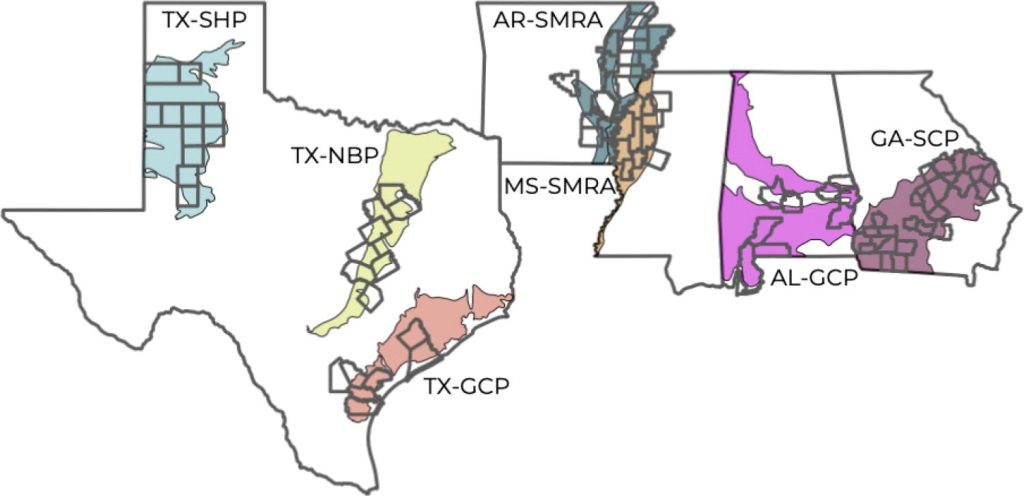
Counties and regions included in the regional soil health surveys: Texas Southern High Plains; Texas Northern Blackland Prairies; Texas Gulf Coast Prairies; Southern Mississippi River Alluvium in Arkansas; Southern Mississippi River Alluvium in Mississippi; Alabama Gulf Coast Plain; and Georgia Southern Coastal Plain.
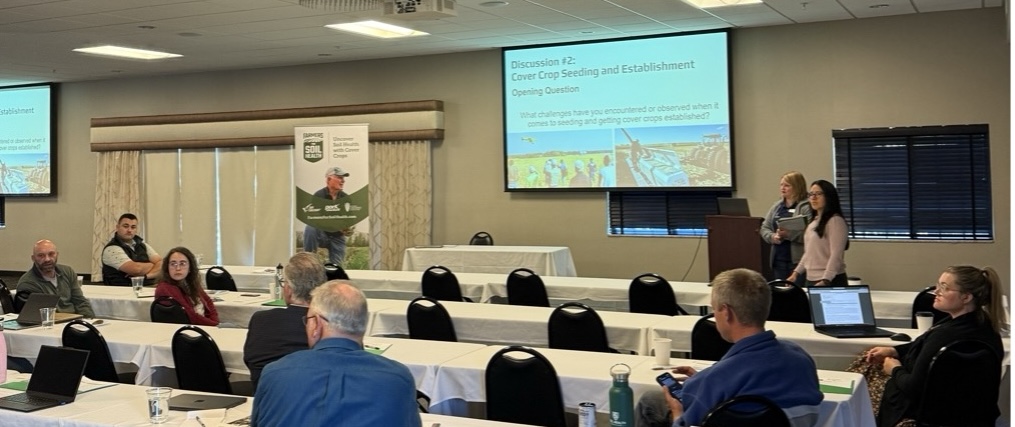
The Soil Health Institute (SHI) and the University of Missouri’s Center for Regenerative Agriculture (CRA) brought together state technical assistance (TAs) providers and program leaders on October 22-23 in Kansas City, Missouri, for the Farmers for Soil Health (FSH) State Partner Education Meeting. The two-day event combined classroom learning, guided discussions and field visits, creating the opportunity for technical advisors to deepen their cover crop knowledge and build connections with peers across states.
What is Farmers for Soil Health?
Farmers for Soil Health is a program designed to support farmers in adopting cover crop practices through financial incentives, technical assistance, and educational resources.
Cover Crop Returns Look Different on Every Farm
Day 1 presentations tackled a common question farmers have: Do cover crops pay? One theme stood out from cover crop economics and profitability discussions: some producers see immediate returns, particularly due to reduced input costs, while others realize increased benefits from cover crop use over multiple years of experience.
Perhaps the most important takeaway from the meeting was the emphasis on customization. “We can’t say ‘just use cereal rye’ or ‘don’t use herbicides’ — that will not work for everyone,” one presenter stressed. Success with cover crops depends on your specific field conditions, the year’s weather patterns, your operation’s goals, and countless other variables.
Breakout discussions gave state technical advisors time to dive deeper into cover crop species selection and seeding strategies, sharing what’s working in their regions and troubleshooting common challenges. These conversations reinforced that while research provides valuable guidelines, on-farm experience and local expertise are irreplaceable.
Learning from the Land & Looking Ahead
Day 2 took the group out of the conference room and onto Missouri farms. Field visits included stops at a 100-year-old corn-soybean operation using cereal rye, and a diversified farm experimenting with silviculture systems using cover crops for grazing while planting high-value trees. A cover crop seed supplier also spoke about seed varieties and their benefits. These farm visits gave the opportunity to technical advisors to see cover crop strategies in action and ask questions in real-world settings from experienced farmers. Later, sessions with DTN, NFWF, and B3 Creative Agency explored improving FSH enrollment and outreach tools.
The Power of Peer Networks
While the technical content was valuable, many attendees highlighted the networking opportunities as the meeting’s most enriching aspect. State technical advisors found tremendous value in connecting with peers facing similar challenges in different regions. The exchange of ideas, advice, and support revealed a community deeply committed to helping farmers succeed with cover crops.
From the evening social to breakout discussions and bus rides between farm stops, the meeting created opportunities for technical advisors to learn from each other’s experiences and build relationships that will continue long after the event.
Learn More & Stay Connected
“Gain experience and learn what works on your operation.” Cover crops require learning and adaptation, but with the right support, technical guidance, and patience, they can be a powerful tool for improving soil health and farm profitability.
For farmers interested in learning more about cover crops and the support available through Farmers for Soil Health, visit www.farmersforsoilhealth.com or contact your state technical assistance provider. SHI and CRA will continue to host virtual and in-person education events to support cover crop adoption across 20 states covering the Midwest, Great Lakes, and Chesapeake Bay, with virtual webinars open to everyone and geared towards farmers, landowners, and technical advisors.
As the Soil Health Institute marks its tenth year as a global non-profit dedicated to safeguarding and enhancing the vitality and productivity of soils, the organization has been honored with the Presidential Award from the American Society of Agronomy.
The award recognizes “individuals or teams who have influenced agronomic sciences or crop production practices so greatly that the impact of their efforts will be enduring on future science,” the society said.
The award was given at CANVAS — the international annual meeting of the American Society of Agronomy, Crop Science Society of America, and Soil Science Society of America — in Salt Lake City Nov. 10.
Dr. Cristine Morgan, Chief Scientific Officer, and Dr. Wayne Honeycutt, President and CEO, accept the ASA Presidential Award.
Founded in 2015, the Soil Health Institute creates and translates soil health knowledge to empower farmers and ranchers to grow quality food, fiber, and fuel using regenerative soil health systems. These systems sustain farms and rural communities, promote climate resilience and a clean environment, and improve human health and well-being. With more than 30 employees working remotely and at its headquarters in North Carolina, SHI has expanded its footprint across North America and beyond.
As SHI enters its second decade, the organization will also transition to new leadership, with its second CEO and President expected to be announced in December.
Under the guidance of founding CEO and President Dr. C. Wayne Honeycutt, SHI’s accomplishments include:
Demonstrating the business case for adopting soil health practices on over 160 farms
Identifying cost-effective, widely applicable measurements of soil health now supported by USDA in all 50 states
Establishing soil health benchmarks on more than 19 million acres, showing farmers how healthy their soils can become and how much more water they can store once improved
Delivering education programs across 35 states and three provinces to support farmers on their adoption journey
The Soil Health Institute’s funders include Cargill, Cotton Incorporated, Earth Optics, the Foundation for Food & Agriculture Research, General Mills, the Ida and Robert Gordon Family Foundation, Hearst Foundations, Indigo, Land O’Lakes, Levi Strauss & Co., McCain Foods, the McKnight Foundation, National Fish and Wildlife Foundation, The Samuel Roberts Noble Foundation, Patagonia, Platform for Agriculture and Climate Transformation, the Ralph Lauren Corporate Foundation, RÙADH, Unilever, the United States Climate Alliance, UPL, the United Soybean Board, USDA, U.S. Department of Energy, VF Foundation, Walmart Foundation, Walton Family Foundation, Wells Fargo, Wrangler, and Yard Stick.
Dr. C. Wayne Honeycutt, the Soil Health Institute’s President and Chief Executive Officer, has announced his intention to retire in 2026.
Under Dr. Honeycutt’s leadership, SHI grew from a small startup to a thought leader in soil health and regenerative agriculture with over 30 employees across North America. As SHI marks its 10th anniversary, Dr. Honeycutt felt the time was right to pass the torch to its second President and CEO.
During Dr. Honeycutt’s tenure, SHI assessed the business case for adopting soil health practices on over 160 farms, identified cost-effective, widely applicable measurements for scaling soil health assessments that are now supported by USDA financial assistance programs in all 50 states, and established soil health benchmarks on more than 19 million acres across North America, showing farmers how healthy their soils can become and how much more water they can store once soil health is improved. These and other advances inform SHI’s soil health education programs to support farmers on their adoption journey across 35 states and 3 provinces.
The Soil Health Institute’s Board of Directors has established a committee to lead a search for Dr. Honeycutt’s replacement. Application information is available through our Leadership Profile.
Updates on the search will be posted on SHI’s Facebook and LinkedIn pages, as well as the SHI website.