These in-field indicators of soil health use simple tools and your senses

Soil tells a story — one that reveals itself to those who know how to read it. Next time you’re out in the field, try out some of these simple tests to get an idea of how healthy your soil really is.
Aggregate Stability
Aggregates are small clumps of soil particles that are essential for allowing water, air, and roots to move freely through the soil. When soil is healthy, these aggregates tend to have a rounder shape; when soil has been degraded, aggregates have sharper corners. Another indication of soil health is how these aggregates behave in water. If aggregates stay mostly intact, this is a sign of healthy soil. If the aggregates break apart or “slake,” the soil has been degraded and is likely prone to soil erosion and poor water infiltration. Check out our free smartphone app, Slakes, to measure aggregate stability yourself.
Residue Breakdown
In healthy soil, crop residues steadily break down as organisms cycle the carbon and nutrients into the soil. But if crop residues stick around for months or years without decomposing, it suggests that soil organisms are struggling. This could be for a variety of reasons: excessive tillage, soil compaction, low moisture, or insufficient nitrogen. Use this tool from the USDA-NRCS to evaluate residue cover.

Water Infiltration
How quickly soil absorbs water is a crucial indicator of its ability to support crop growth and prevent erosion. Soil texture plays a big role: sandy soils allow water to move through the soil faster than clay ones. Because of the influence of soil texture, it’s best to compare infiltration rates from a field to an undisturbed reference area like a fencerow on the same type of soil. You can also watch how the water moves after a heavy summer rain. Healthy soils shouldn’t form runoff channels or have standing water on the surface after 24 hours. For instructions on measuring soil infiltration using a metal ring and a timer, see this USDA-NRCS Factsheet.
Surface Crust
If water has ponded in the field after a rain, you’ll likely end up with a hard crust on the soil surface once it dries. A surface crust can make it tough for seedlings to emerge or for water to soak in when the next rain comes. Crusting often happens when soil structure has been degraded through tillage, when the soil lacks organic matter, or when soil organisms are struggling. Healthy soils should provide a nice, mellow seedbed for good seed-to-soil contact, and shouldn’t form cracks when they dry.

Compaction
Healthy soil should let plant roots travel deep and wide. But when soil gets compacted, plant roots are forced to grow sideways or stay shallow. Water follows the same pattern: if it can’t move through, it pools on the surface, leading to runoff and erosion. A simple way to look for compaction is by pushing a metal rod, screwdriver, or shovel into the soil 6 to 12 inches. If you meet resistance within the first few inches, you likely have a compaction problem.
Color
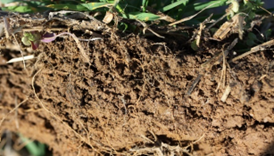
Soil color can tell you a lot about what’s happening underground. Dark, rich soil signals high organic matter and active microbial life. Since soils naturally vary in color, the best way to assess this indicator is by comparing a field to an undisturbed area nearby. Healthy soil usually has a darker topsoil layer that gradually lightens as you go deeper, showing a clear distinction between surface and subsoil. In contrast, when there’s little to no color difference between topsoil and subsoil, this may indicate the soil has been degraded.
Soil Biology
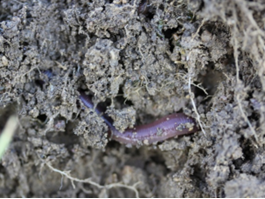
Healthy soil is full of life—not just plants, but an entire underground ecosystem. Dig up a small section of soil and look for signs of life. Can you find earthworms, earthworm channels, or their casts (small, coiled piles of soil)? What about millipedes, centipedes, pill bugs, or springtails? Or can you spot white fungal threads (hyphae) holding soil aggregates together? Each of these organisms play an important role in breaking down crop residues, cycling nutrients, and improving soil structure. Check out this factsheet from Xerces Society for help identifying soil dwellers.
Beyond In-Field Assessments
While in-field tests are useful, laboratory measurements offer a deeper look at how soil functions beneath the surface. The Soil Health Institute teamed up with scientists across North America to identify a few simple, affordable ways to measure soil health. They landed on four essential indicators: soil organic carbon, carbon mineralization potential, aggregate stability, and available water holding capacity. Together, these measurements provide a science-based, scalable approach to assessing soil function across a wide range of soils and cropping systems.
From Insights to Impact
When using any of these in-field soil health assessments, remember that soils are incredibly diverse and these indicators can present differently on different soil types. To best understand how healthy a field is, compare it to an undisturbed area with a similar soil texture.
Native, undisturbed soils show us how the soil functions at its best. As our managed soils become more like undisturbed soils, they cycle water and nutrients more effectively, are more resilient to extreme weather, are more resistant to disease outbreaks, and are ultimately more profitable to farm.