Nationwide Study on 30 U.S. Farms Shows Positive Economic Impact of Soil Health Management Systems

MORRISVILLE, N.C., August 9, 2023 – Today, the Soil Health Institute and National Association of Conservation Districts announced the results of a nationwide study that demonstrates how improving soil health can help farmers build resilience and improve profitability across a diversity of soil types, geographies, and cropping systems.  

“We know practices like cover crops and no-till benefit the environment by storing soil carbon, reducing greenhouse gas emissions, and improving water quality,” said Dr. Wayne Honeycutt, President and CEO of the Soil Health Institute. “However, investing in soil health is also a business decision. This project provides farmers with the economic information they need to feel confident when making that decision.” 

This multi-year and data-driven collaboration among the Soil Health Institute (SHI), the National Association of Conservation Districts (NACD), and the United States Department of Agriculture (USDA) Natural Resources Conservation Service (NRCS) assessed the economics of soil health management systems (SHMS) for a range of crops including canola, chickpea, corn, cotton, dried bean, grain sorghum, millet, pea, peanut, rye, soybean, sunflower, walnut, and wheat. Some of the operations also raised dairy cows, beef cattle, chickens, and hogs. SHI and NACD conducted extensive interviews with 30 farmers with an established history of successful implementation of a wide range of SHMS, including cover crops, no-till, reduced till, strip till, planting green, rotational grazing, livestock integration, and manure incorporation across 20 states. Interviews were designed to learn about farmers’ experiences with adopting those systems and to evaluate their economics by comparing the costs and benefits before and after practice adoption.  

“Increasing the efficiency as well as resilience of farms and farm communities has never been more important,” said Jeremy Peters, NACD Chief Executive Officer. “We recognize that farmers must weigh the costs, risks, and overall benefits when introducing new practices into their operations. This project shows that soil health management systems are both feasible and profitable. Conservation Districts can provide hands-on technical assistance to producers to design a system of practices that make sense for their land, while helping enroll producers into programs that offer financial incentives that fit their business model.” 

Key findings include: 

  • Across 29 farms, SHMS increased net farm income by an average of $65/acre (1 organic farm was excluded due to high revenue from price premiums). 
  • On average, when implementing SHMS, it cost producers $14/acre less to grow corn, $7/acre less to grow soybean and $16/acre less to grow all other crops. 
  • Yield increases due to SHMS were reported for 42% of farms growing corn, 32% of farms growing soybean, and 35% of farms growing other crops.  
  • Farmers also reported additional benefits of adopting SHMS, such as decreased erosion and soil compaction, earlier access to fields in wet years, and increased resilience to extreme weather. 

“Soil health management practices help producers increase profits, reduce costs, and limit risks while conserving our nation’s resources,” said NRCS Chief Terry Cosby. “The results experienced by these 30 diverse farmers from across the country show the financial benefits of implementing soil health management systems across many different production systems, and highlight how critical voluntary conservation programs are to the viability of U.S. agriculture.” 

Individual farmer videos, 2-page economic factsheets, and 1-page narratives have been created for each of the 30 farmers interviewed to support soil health education and outreach. Results from the wide range of farms, production systems, and geographies included in this national study indicate that many more farmers may also benefit economically from adopting SHMS, thereby expanding the associated on-farm and environmental benefits for farmers and society. 

For more information about the economic case studies, including videos, producer narratives and fact sheets, please visit: https://soilhealthinstitute.org/our-work/initiatives/economics-of-soil-health-systems-on-30-u-s-farms/ 

About the Soil Health Institute

The Soil Health Institute is a global non-profit with a mission to safeguard and enhance the vitality and productivity of soil through scientific research and advancement. We bring together leaders in soil health science and industry to help farmers, ranchers, and landowners adopt soil health systems that build drought resilience, stabilize yield, and benefit their bottom line. The Institute’s team of scientists, holding doctorates in various soil science and related disciplines, has developed highly effective soil health targets and standardized measurements to quantify progress at achieving regenerative and sustainable agricultural systems, and leads the cutting-edge fields of carbon sequestration and decoding the soil microbiome. Healthy soils are the foundation for rejuvenating our land. Together, we can create a secure future for all, mitigate the effects of climate change, and help agriculture and organizations meet production and environmental goals at scale.  Learn more at www.soilhealthinstitute.org. 

About the National Association of Conservation Districts

The National Association of Conservation Districts is the nonprofit organization that represents the nearly 3,000 conservation districts across the United States, their state and territory associations, and the 17,000 men and women who serve on their governing boards. For more than 75 years, local conservation districts have worked with cooperating landowners and managers of private working lands to help them plan and apply effective conservation practices. For more information about NACD, visit www.nacdnet.org.  

About the USDA Natural Resources Conservation Service:

The Natural Resources Conservation Service (NRCS) is an agency of the U.S. Department of Agriculture that provides one-on-one, personalized advice on the best solutions to meet the unique conservation and business goals of those who grow our nation’s food. NRCS helps landowners make investments in their operations and local communities to keep working lands working, boost rural economies, increase the competitiveness of American agriculture, and improve the health of our air, water, and soil. NRCS also generates, manages, and shares the data, research and standards that enable partners and policymakers to make decisions informed by objective, reliable science. In simpler terms, NRCS’s focus is “Helping People Help the Land.” For more information, visit www.nrcs.usda.gov. USDA is an equal opportunity provider, employer, and lender. 


“Getting Started with Cover Crops” Field Day in Tillar, Arkansas

The “Getting Started with Cover Crops” field day was held at the farm of SHI Farmer Mentor Wes Kirkpatrick in Tillar, Arkansas, on July 25, 2023. Throughout the day, growers discussed their experiences, challenges encountered, and shared strategies for managing cover crops in a cotton rotation. This gathering also served as the launch for the SHI USRCF Cover Crop Challenge Program, which provides funding to help offset the cost of seed for growers planting cover crops for the first time. Attendees appreciated the opportunity to meet and learn from other growers. The event, hosted by SHI Soil Health Educator Emily Ball and SHI Technical Specialist Dr. Bill Robertson, attracted 13 participants, including eight growers.

SHI Technical Specialist Dr. Bill Robertson leads field day discussion under pavilion

SHI Technical Specialist Dr. Bill Robertson facilitated a discussion on cover crop termination during a field day in Tillar, Arkansas. Photo credit: Emily Ball, SHI Soil Health Educator.

If you would like to get in contact with an SHI Soil Health Educator, Technical Specialist, or Farmer Mentor, please visit our Contacts page.


“Mid-season Crop Update and Cotton Soil Health” Field Day in Midville, Georgia

The “Mid-season Crop Update and Cotton Soil Health” field day was held at the farm of SHI Farmer Mentor Jacob Sandeford in Midville, Georgia, on July 24, 2023. Mr. Sandeford has integrated cover crops and reduced tillage into his cotton farming practices since 2012. The day covered a range of topics, from soil health to mid-season agronomic issues like bug scouting and herbicide application strategies. The session provided a valuable opportunity for growers to engage directly with Mr. Sandeford, particularly on effective cover crop management and strategies for achieving successful cotton establishment in residue-covered fields. SHI’s Technical Specialist in Georgia, Jason Mallard, demonstrated the blue dye test in the field, offering attendees a practical visual comparison of water infiltration rates between cover-cropped/reduced tillage areas and conventionally tilled plots. The event, co-hosted by SHI Soil Health Educator Jessica Kelton, along with Peyton Sapp, the Southeast District County Extension Coordinator for the University of Georgia Extension and SHI Technical Specialist, saw 35 participants, including 20 growers.

SHI Technical Specialist Peyton Sapp speaks to field day attendees in field

SHI Technical Specialist Peyton Sapp, also the Southeast District County Extension Coordinator for the University of Georgia Extension, discussed nematode levels in cover crop systems at a field day in Midville, Georgia. Photo credit: Jessica Kelton, SHI Soil Health Educator.

If you would like to get in contact with an SHI Soil Health Educator, Technical Specialist, or Farmer Mentor, please visit our Contacts page.


An Evaluation of Nitrogen Indicators for Soil Health in Long-Term Agricultural Experiments

Interpretive Summary of the Technical Paper:

“An evaluation of nitrogen indicators for soil health in long-term agricultural experiments”

Cycling of nitrogen (N) in soil is vital to maintaining soil health and agricultural productivity. While N research related to optimal fertilization rates and nutrient management has been conducted for decades, traditional soil fertility tests only provide a snapshot of a soil’s N content and may not provide a comprehensive understanding of the capacity of a soil to supply N over the long term. In the context of soil health, nitrogen indicators focus on the biological processes that determine a soil’s ability to cycle and supply N over time, rather than measuring the nitrogen available to plants in a given soil at a single time point. Many indicators have been proposed to measure organic N pools, N processes, or proxies for N pools/processes, but limited information is available on how these indicators are related to each other, to soil properties, or to management practices.

To identify the most suitable indicators for characterizing N cycling at a continental scale, the Soil Health Institute collaborated with approximately 100 partners to assess soil health measurements for a range of management practices at 124 research sites across North America. We evaluated several measurements that quantify different types of N or the potential of soil microbes to cycle N, including five indicators related to organic N pools and microbial activity (soil organic N, potential N mineralization, water extractable organic N, autoclavable citrate extraction protein, and N-acetyl glucosaminidase enzyme activity), and two commonly used fertility measurements (extractable nitrate and ammonium). We focused our evaluation on three aspects: the relationship of each N indicator to soil properties and climate variables, their response to management practices, and their correlation with other indicators and carbon measurements.

We found that across North America, N indicators of soil health were most consistently related to temperature, with higher indicator values observed at colder sites. The N indicators generally responded to the soil health practices investigated, including reduced tillage, cover cropping, organic nutrient application, and crop residue retention, but did not show a response to changes in cropping system diversity. In contrast, the commonly used fertility measures of extractable inorganic N were not related to the soil health management practices investigated. The N indicators evaluated in this study were strongly correlated with each other and with carbon indicators previously evaluated by SHI, with both C and N indicators being sensitive to management practices that increased organic matter inputs to the soil. Given these findings, we propose that the carbon indicators previously recommended by SHI (24-hour carbon mineralization potential and soil organic carbon) can also be used to capture N cycling.

Learn more about this study by reading the peer-reviewed manuscript here: https://doi.org/10.1002/saj2.20558


‘Living Soil’ Documentary Reaches Over 4 Million Views Worldwide

FOR RELEASE Thursday, May 18, 2023

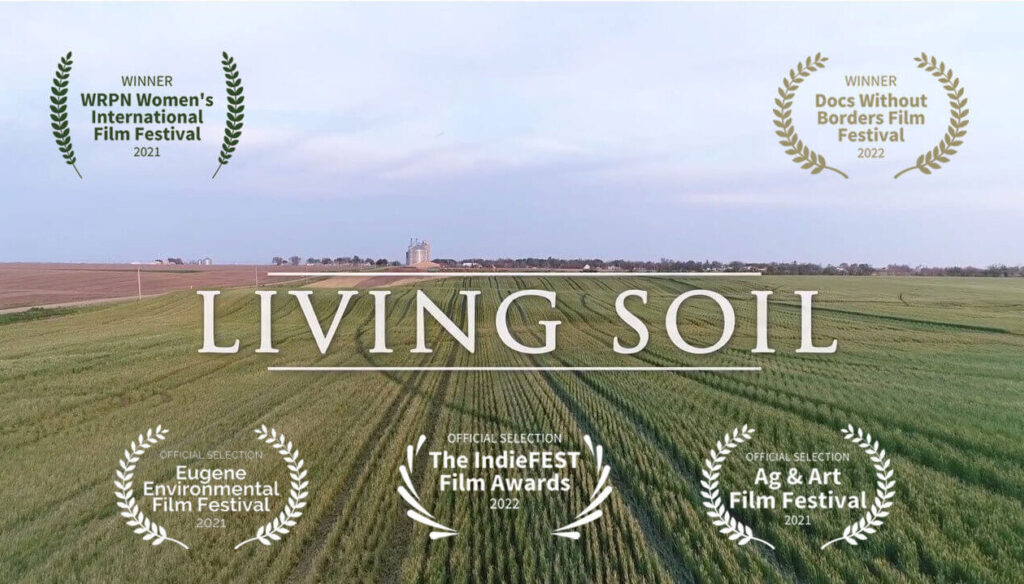
MORRISVILLE, N.C., May 18, 2023/PRNewswire/ — “Living Soil” – a groundbreaking film produced by the Soil Health Institute in 2018 – has reached a milestone of over 4 million views. The documentary has been watched in over 130 countries and has won numerous awards, including “Outstanding Excellence in Direction, Editing, and Cinematography” at the Women’s International Film Festival (2021) and “Best of Show for Environmental Films” by the Docs Without Borders Film Festival (2022). It was made possible through the generous support of The Samuel Roberts Noble Foundation.

Living Soil film

“We are thrilled that ‘Living Soil’ has been so well-received,” said Dr. Wayne Honeycutt, president and CEO of the Soil Health Institute. “We believe the documentary’s success demonstrates the growing awareness of the importance of soil health and the need for regenerative soil management.”

“Living Soil” tells the story of how enriching the soil enhances life on our planet. Directed by Chelsea Myers of Tiny Attic Productions, the film takes viewers on a journey across the United States, showcasing the collaborative work of farmers, scientists and policymakers to protect one of Earth’s most vital resources: soil. The locales featured range from the lush landscapes of Oregon, to the sunbaked fields of California and the vast green acres of the Midwest, to the waterfront farming and fishing communities in and around the Chesapeake Bay.

“Soil is a living and dynamic system that supports 95 percent of all food production. It filters our water, sequesters carbon and is the foundation for biodiversity,” Dr. Honeycutt said. “However, in the last 150 years, we’ve lost half of the organic matter that makes soil productive. The societal and environmental costs of soil loss and degradation in the United States alone are estimated to be as high as $85 billion every year.”

As we face the challenges of feeding an ever-growing population while mitigating and adapting to climate change, humanity is depending on our soils to provide as much food by 2060 as has been consumed in the past 500 years. “Living Soil” is a call to action to improve soil health, thereby improving farmer livelihoods, water quality and the environment.

The Soil Health Institute encourages everyone to watch the documentary and join the movement to safeguard the health of our soils.

Watch the film for free at https://soilhealthinstitute.org/our-work/initiatives/living-soil-documentary/ 

About the Soil Health Institute

The Soil Health Institute is a global 501(c)(3) non-profit with a mission to safeguard and enhance the vitality and productivity of soil through scientific research and advancement. We bring together leaders in soil health science and the industry to help farmers, ranchers and landowners adopt soil health systems that build drought resilience, stabilize yield and benefit their bottom line. The Institute’s team of scientists, holding doctorates in various soil science and related disciplines, has developed highly effective soil health targets and standardized measurements to quantify progress at achieving regenerative and sustainable agricultural systems. Additionally, they lead the cutting-edge fields of carbon sequestration and decoding the soil microbiome. Healthy soils are the foundation for rejuvenating our land. Together, we can create a secure future for all, mitigate the effects of climate change and help agriculture and organizations meet production and environmental goals at scale. 

Visit our website to learn more and follow us on LinkedIn and Facebook. 

For media inquiries, contact Byron Rath at brath@soilhealthinstitute.org  


AIM for Climate Summit: Driving Transformative Action in Agriculture and Food Systems Innovation 

The United States recently hosted the AIM for Climate Summit in Washington, D.C. from May 8th to May 10th, 2023. This premier global event, supported by the Foundation for Food & Agriculture Research (FFAR), brought together a diverse range of stakeholders, including policymakers, industry leaders, producers, civil society groups, scientists, and researchers from around the world. The Summit focused on accelerating investment in and support for agriculture and food systems innovation to combat climate change. 

It was a momentous week for the Soil Health Institute to amplify the impact of soil health initiatives that play a crucial role in ensuring a resilient future for our food systems. Here are some highlights from our week in DC: 

Tuesday, May 9 

SHI’s Chief Scientific Officer, Cristine Morgan, Ph.D., participated in a panel discussion with Devon Leahy, Global Sustainability Officer at Ralph Lauren,  Jesse Daystar, Ph.D., Vice President and Chief Sustainability Officer at Cotton Incorporated, and Byron Rath, SHI’s Chief Impact Officer, to discuss the U.S. Regenerative Cotton Fund (USRCF). 

The breakout session, entitled “Measuring Soil Health: The Foundation of Regenerative Agriculture” addressed the strategies SHI is employing to quantify achievable levels of soil organic carbon concentration, carbon mineralization potential, aggregate stability, and available water holding capacity for different soil types across more than 11 million acres representing 85% of U.S. cotton production. 

The USRCF is made possible with support from the Ralph Lauren Corporate Foundation, the Walmart Foundation, the VF Foundation, Levi Strauss & Co, Cotton Incorporated, and the Hearst Foundations. 

Learn more about USRCF.

SHI’s Chief Scientific Officer, Cristine Morgan, Ph.D., participated in a panel discussion with Devon Leahy, Global Sustainability Officer at Ralph Lauren,  Jesse Daystar, Ph.D., Vice President and Chief Sustainability Officer at Cotton Incorporated, and Byron Rath, SHI’s Chief Impact Officer, to discuss the U.S. Regenerative Cotton Fund (USRCF). 

Wednesday, May 10 

The Dairy Soil and Water Regeneration Project (DSWR), led by Dairy Management Incorporated (DMI), was announced as an Innovation Sprint by the Agriculture Innovation Mission (AIM) for Climate. The U.S. Dairy Net Zero Initiative aims to achieve greenhouse gas neutrality in the dairy industry while improving water use and quality. The DSWR project will collect data over six years to assess the greenhouse gas footprint and soil health of dairy farms in response to soil health management practices and innovative manure-based products. 

SHI Project Manager and Research Soil Scientist, Dr. Mara Cloutier (featured below right alongside Dr. Tim Kurt, Senior Vice President of Environmental Research for DMI and SHI’s Chief Scientific Officer, Dr. Cristine Morgan), works with dozens of dairies across the major production regions of the U.S. to baseline their soil health and carbon storage as part of this effort. DSWR is being implemented with generous support from the Foundation for Food & Agriculture Research with matching contributions from Nestlé, the dairy industry, and Newtrient. 

SHI Project Manager and Research Soil Scientist, Dr. Mara Cloutier (featured below right alongside Dr. Tim Kurt, Senior Vice President of Environmental Research for DMI and SHI’s Chief Scientific Officer, Dr. Cristine Morgan)

Learn more about the Dairy Soil and Water Regeneration Initiative.

SHI’s Chief Scientific Officer, Cristine Morgan, Ph.D., was excited to join the Coalition of Action 4 Soil Health (CA4SH) Team’s AIM for Climate Panel “Scaling Healthy Soil Practices through Innovative Partnerships, Financing & Policy.” She was joined by colleagues from the  International Maize and Wheat Improvement Center (CIMMYT), CIFOR-ICRAF, Clim-Eat, World Business Council for Sustainable Development, Bayer, U.S. Department of Agriculture, Ohio State University, and Sustainable Harvest. Together, they highlighted on-the-ground advancements in accurate monitoring of soil health, opportunities for a soil health resolution in upcoming climate negotiations, and opportunities for equitable finance. SHI is excited to be linked with CA4SH in its efforts to improve soil health across the globe by addressing barriers that farmers face when adopting and scaling soil health management systems. 

Learn more about CA4SH.

Learn more about SHI’s Recommended Measurements for Scaling Soil Health Assessment.

Coalition of Action 4 Soil Health (CA4SH) Team’s AIM for Climate Panel “Scaling Healthy Soil Practices through Innovative Partnerships, Financing & Policy.”

The AIM for Climate Summit provided a platform for AIM for Climate partners to raise ambition and amplify their work in climate-smart agriculture and food systems innovation. Through our participation in various panels and discussions, SHI made a significant impact on this global audience and showcased our commitment to safeguarding and enhancing the vitality and productivity of soils through scientific research and advancement. 


Wichita Falls Ranch and Farm Expo Workshop in Wichita Falls, Texas

SHI Soil Health Educator Emily Ball spoke about SHI and U.S. Regenerative Cotton Fund initiatives in Texas at the Wichita Falls Multi-Purpose Event Center (WFMPEC) during a workshop at the Wichita Falls Ranch and Farm Expo on March 9, 2023. The workshop included presentations from growers who shared their experiences, and the United States Department of Agriculture Natural Resources Conservation Service showcased a rainfall simulator and explained what happens when five different land management practices receive rain. The growers were particularly engaged during the presentations and asked questions about the challenges they faced when adopting soil health practices. The workshop ended with a grower panel that was well received by the 60 attendees, 35 of whom were growers.

If you would like to get in contact with an SHI Soil Health Educator, Technical Specialist, or Farmer Mentor, please visit our Contacts page.


SHI Field Day in Greenville, North Carolina

During the planter clinic field day at the Pitt County Agricultural Center in Greenville, North Carolina, on March 1, 2023, representatives from several regional dealers that provide no-till and precision equipment, Better Cotton Initiative employees, and a cover crop seed company, presented on various topics. The clinic also included well-received presentations from Russell Hedrick, a grower with extensive experience with no-till and cover cropping, and Will Mann, a private consultant and SHI Technical Specialist. There were approximately 30 attendees, 10 of whom were growers. Thank you to SHI Soil Health Educators Emily Ball and Jessica Kelton for organizing this field day!

SHI Technical Specialist Will Mann speaks to clinic attendees in front of projector screen

Will Mann, a private consultant and SHI Technical Specialist, speaking to attendees at the North Carolina Planter Clinic hosted by SHI in Greenville, North Carolina. Photo credit: Jessica Kelton, SHI Soil Health Educator.

If you would like to get in contact with an SHI Soil Health Educator, Technical Specialist, or Farmer Mentor, please visit our Contacts page.