Maximizing Weed Suppression with Cover Crops in Cotton Production

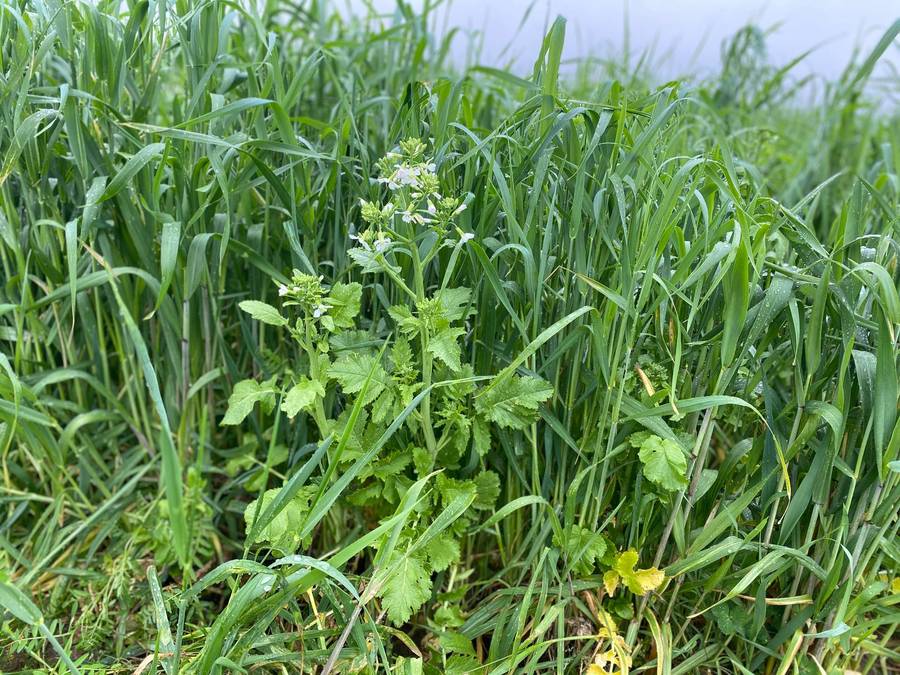
The use of cover crops in soil health management systems is growing in popularity due to their numerous benefits. Not only do cover crops help maintain soil integrity and improve environmental health, but they also offer an additional advantage: weed suppression. This is especially crucial for cotton, which is a slow-growing crop and particularly vulnerable to early-season weed competition. 

To help effectively integrate cover crops into your system as a weed suppression tool, the Soil Health Institute, Texas A&M AgriLife Research, and Rodale Institute have developed two fact sheets. The first describes how cover crops can help cotton farmers control weeds and how cover crops can work in organic systems. The second compares cover crop species in the U.S. Cotton Belt and includes insights from farmers who have successfully applied these methods. 

“Cover crops can be a powerful tool for cotton farmers, not only for enhancing soil health, but also for combating weed pressure. By understanding the specific benefits and applications of different cover crop species, farmers can make informed decisions that lead to healthier soils and more resilient cotton crops.”

– Jessica Kelton, Fact Sheet Author and SHI Soil Health Educator
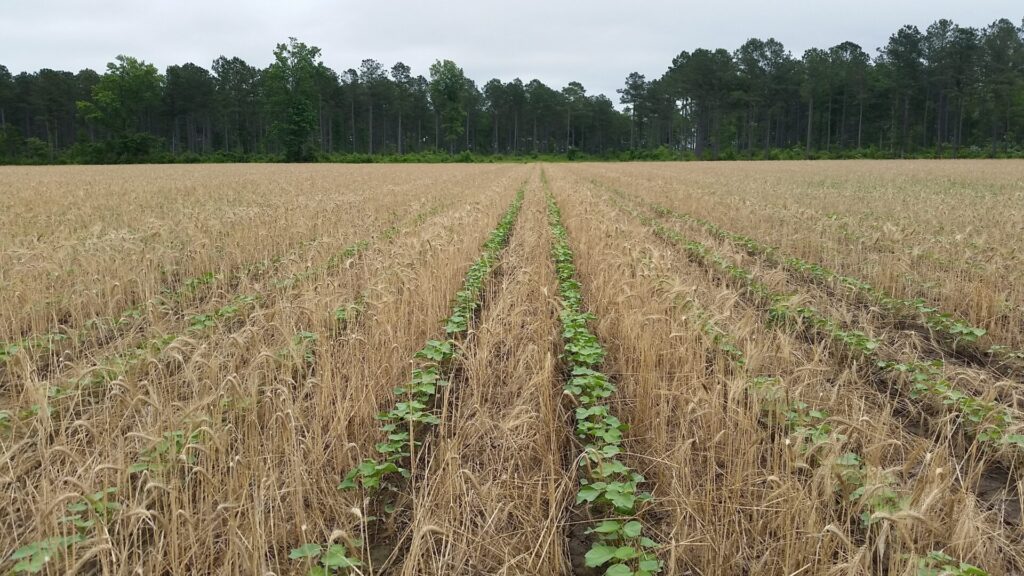
Established cotton growing in terminated standing cover crops in a North Carolina field.
Cotton planted into standing cover in North Carolina. Photo Credit: Zeb Winslow

What are the benefits of cover crops, especially for weed suppression?

Cover crops, a component of soil health management systems, are a well-known weed suppression tool that can improve soil and provide other environmental benefits. They are also a key practice in regenerative agriculture, which focuses on restoring and maintaining soil and ecosystem health. Cover crops can assist with long-term sustainability goals and improve farm profitability. Long-term use of cover crops benefits cotton farmers and the environment through increased drought resilience, nutrient cycling, soil organic carbon; improved erosion control, water infiltration, habitat for soil life; and reduced herbicide resistance and weed densities.  

Cover crops have a high potential for reducing weed densities over diverse soil and climatic conditions in both conventional and certified organic cotton production. There is a general agreement that using a combination of cover crops and other weed suppression tools, such as herbicides or tillage, will have more positive results for controlling weeds in cotton systems compared to either strategy alone. Cover crops are also valuable in managing herbicide-resistant weeds. Moreover, they contribute to crop rotation and diversity, which are needed in cotton systems. While well-studied cover crops like cereal rye, wheat, and vetch have proven effective for weed suppression in cotton, less common species such as lupine, turnips, and triticale, as well as mixed cover crops, are underrepresented in current literature. These fact sheets aim to be a valuable resource for cotton farmers considering cover crops for both weed suppression and soil health benefits.

What are some considerations when using cover crops for weed suppression? 

Species selection and seeding rate 

  • Choice of cover crop species and seeding rates can be highly variable from region to region. Depending on climatic conditions, certain species may be more suited for one region than another. 

Planting date 

  • Planting the cover crop early can improve the likelihood of good cover crop establishment. If planting after cash crop harvest, the sooner the cover crop is planted, the better. Planting cover crops early provides good establishment for winter survival and spring growth. 

Termination method and timing 

  • There are several different methods for terminating cover crops, including chemical, frost, mowing, crimping, and tillage. 
  • Choosing when to terminate cover crops involves tradeoffs. Later termination allows more time for biomass production, which makes weed suppression more efficient. At the same time, providing enough time to ensure complete termination before cotton planting is important to avoid any negative effects on cotton establishment. Though no simple formula exists, considering these factors can aid in decision-making and success stories. 

Other considerations 

  • It is wise to start with a few acres that are easily managed and seek advice from local practitioners or advisors who have been successful at using cover crops. 
  • It is important for farmers to keep in mind that each cover crop has specific management requirements, provides unique benefits, and can have limitations that need to be considered prior to planting. 
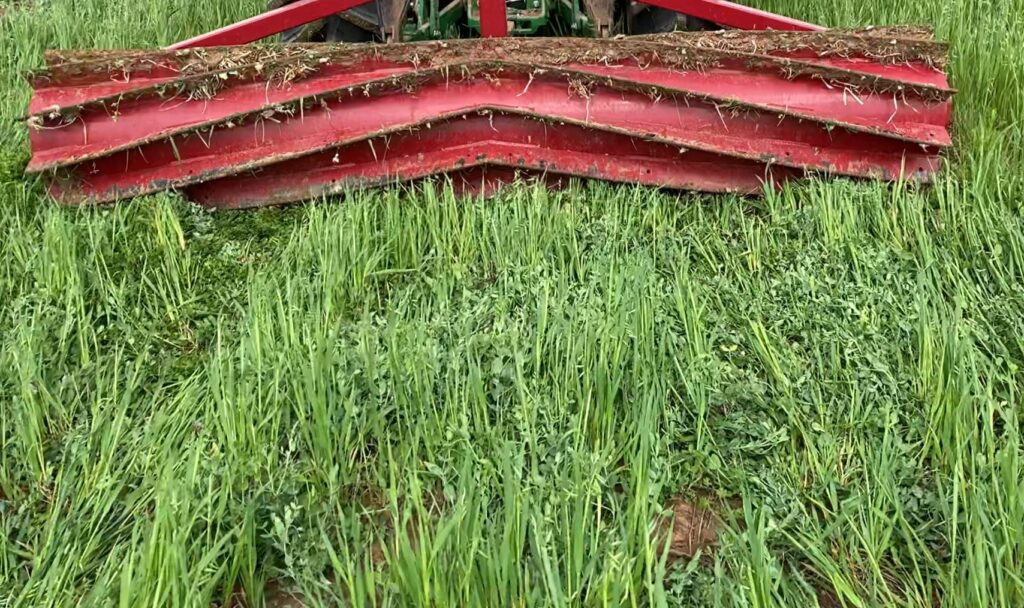
Roller crimper attachment working in a field, crimping cover crops to prepare the soil for planting.
Terminating a cover crop mix of black oats and winter pea with a roller crimper, ahead of organic cotton planting in College Station, Texas. Photo Credit: Muthu Bagavathiannan

“You’ve got to have a lot of biomass for weed suppression. Don’t be afraid of the biomass, but make sure you have the right equipment to work with it. Make sure to spray your cover crops at least two weeks ahead of planting. You also need to have a roller on the strip-till and a sweeper on the planter.” 

– Myron Johnson, Cotton Farmer and SHI Farmer Mentor

With a wide variety of cover crop choices and management systems, reaping the multiple benefits of cover crops takes practice and active management. When you decide to implement cover crops into your practices, be sure to evaluate your soil and its needs, plan your cover crop rotation and timing of it, monitor weed growth, and adjust your cover crop strategy if necessary. If you have any questions after reading the fact sheets, reach out to our USRCF Soil Health Educators, Technical Specialists, and Farmer Mentors that are located in various USRCF states.

More details are provided in the following fact sheets: 

The Soil Health Institute acknowledges the Hearst Foundations whose charitable contributions made these fact sheets possible, as well as additional supporters of the U.S. Regenerative Cotton Fund and USDA Partnerships for Climate-Smart Commodities (NR233A750004G040). Any opinions, findings, conclusions, or recommendations expressed in these publications are those of the author(s) and do not necessarily reflect the views of the U.S. Department of Agriculture. In addition, any reference to specific brands or types of products or services does not constitute or imply an endorsement by the U.S. Department of Agriculture for those products or services. USDA is an equal opportunity provider, employer, and lender. We also thank Texas A&M AgriLife researchers and Rodale Institute for their support in the literature review, analysis, and writing.


“Precision Management for Soil Health” Field Day in Cherokee, Alabama

The “Precision Management for Soil Health” field day was hosted by SHI on June 6, 2024, at SHI Farmer Mentor Shane Isbell’s farm in Cherokee, Alabama. The 60 attendees received an overview of the USRCF initiative and SHI’s benchmarking work from Soil Health Educator Jessica Kelton, who also encouraged attendees to sign up for soil sampling. Isbell shared his experiences on farming with his family. Dr. Rishi Prasad, Auburn University Extension, and Curt Knight, Yara North America Soil Health Agronomist, discussed phosphorus use, soil fertility, and soil health. Jake Harris, Southern Crop Services, and Dr. Steve Li, Auburn University Extension, demonstrated using drones on the farm for spot applications — resulting in reduced inputs — and using drones to seed cover crops. 

Thank you to Alabama Farm Credit for sponsoring the meal and to Jessica Kelton for facilitating this field day!

Jake Harris, Southern Crop Services, demonstrated using drones on the farm for spot applications.

Video and photos were taken by Jessica Kelton, SHI Soil Health Educator.

If you want to contact an SHI Soil Health Educator, Technical Specialist, or Farmer Mentor, please visit our Contacts page.


ATSWCD Soil Health Workshop in Kingsville, Texas

A soil health workshop was hosted by the Association of Texas Soil and Water Conservation Districts (ATSWCD) with support from SHI at the Caesar Kleberg Wildlife Center on the Texas A&M University Kingsville campus in Kingsville, Texas, March 20-21, 2024. The first day started off with a tour of Mr. John Prukop’s farm, where he discussed how they grow irrigated and non-irrigated watermelon along with his experiences of starting to implement strip-tilling to improve soil and water conservation, fertility, and soil health. Prukop Farms has evolved to 90% strip-till or no-till with the occasional conventional tillage where necessary to deter chemically uncontrollable weeds. 

Dennis Brezina, Natural Resources Conservation Service Texas State Soil Health Specialist, gave a demonstration of their rainfall simulator (view below). The rainfall simulator garnered interest from growers wanting to better visualize how rainfall impacts their specific farming practices. 

Dr. Alfonso Ortego, Professor and Research Scientist in the Department of Rangeland and Wildlife Sciences at Texas A&M University Kingsville, spoke about the Caesar Kleberg Wildlife Research Institute, range improvements, and grazing management. 

Emily Ball, SHI Soil Health Educator, spoke about SHI’s soil sampling work in Texas and other projects throughout the U.S. Following her presentation, Dr. Yuri Calil, Assistant Professor and Extension Specialist in Agricultural Economics with Texas A&M AgriLife Extension, highlighted SHI’s economic work in the Texas Southern Great Plains (fact sheet and video) in his presentation and emphasized the importance of considering the profitability of your operation, not yield alone, when adopting soil health management systems.

All photos were taken by Misty Miles, SHI Project Manager.

If you want to contact an SHI Soil Health Educator, Technical Specialist, or Farmer Mentor, please visit our Contacts page.


“Burke and Jefferson County Cover Crop” Field Day in Midville, Georgia 

The University of Georgia Extension’s “Burke and Jefferson County Cover Crop” field day was held at the Southeast Georgia Research and Education Center in Midville, Georgia, on March 13, 2024, and was supported by SHI. The 60 attendees included farmers, conservationists, and local ag retailers who heard presentations on cover crop water use from the long-term soil health system study on the research farm, Sustainable Agriculture Research and Education cover crop variety plot trials, various nitrogen trials, and the importance of mitigating pesticide movement. Demonstrations at the field day included a drone seeding cover crops, usage of minimum till implements, and SHI Soil Health Educator David Lamm showcased SHI’s Slakes app using soil from the long-term study being held at the center.

This video shows a drone seeding cover crops.

All videos and photos were taken by David Lamm, SHI Soil Health Educator.

If you want to contact an SHI Soil Health Educator, Technical Specialist, or Farmer Mentor, please visit our Contacts page.


“Soil Health on the Farm” Field Day in Scotland Neck, North Carolina

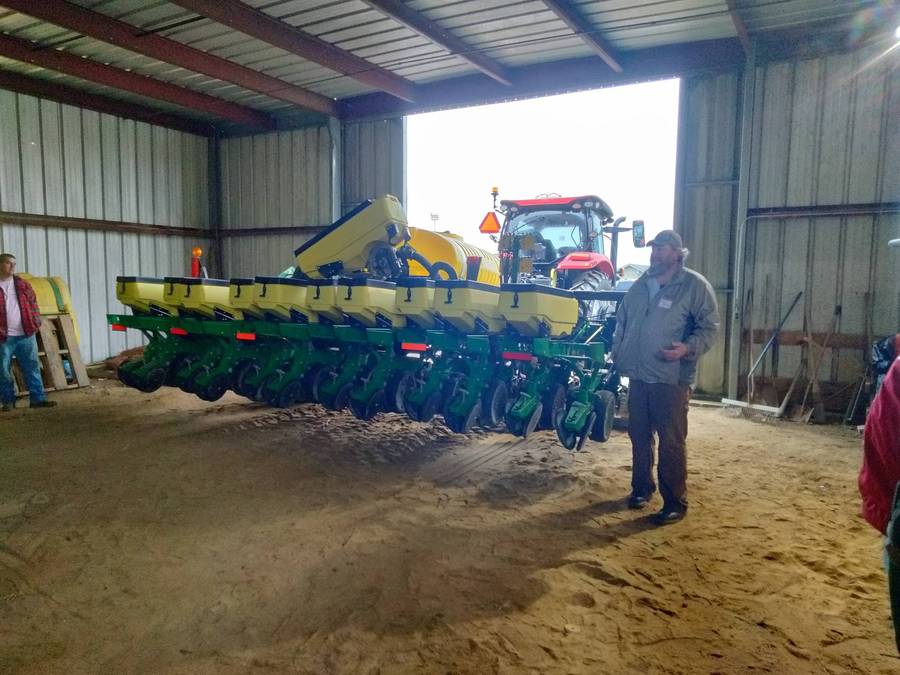
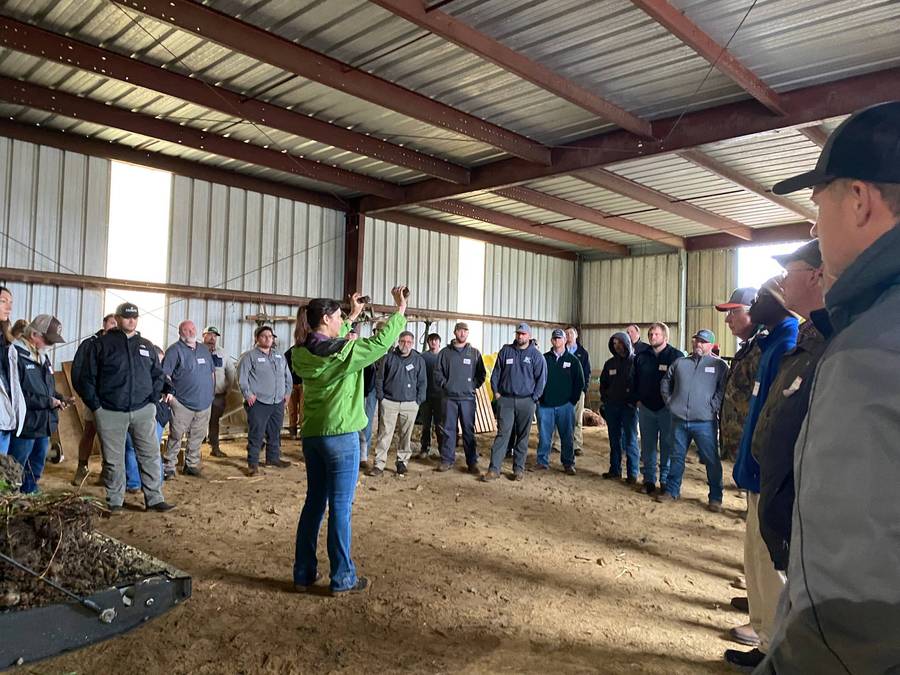
The “Soil Health on the Farm” field day was hosted by SHI on March 6, 2024, in Scotland Neck, North Carolina, at the farm of SHI Farmer Mentor Zeb Winslow. Winslow spoke about his experience planting cover crops and adjustments he has made to his equipment. SHI Technical Specialist Will Mann and a representative from Quality Equipment demonstrated planter basics and maintenance considerations. While in Zeb’s shed, SHI Chief Scientific Officer Dr. Cristine Morgan and SHI Soil Health Educator David Lamm discussed soil structure and field indicators of soil health. North Carolina State Extension Specialist Austin Menker shared cover crop decision support tools available to growers online. The 67 attendees included local growers, crop advisors, and members of the North Carolina Agricultural Consultants Association.

Photo credits: SHI Soil Health Educator Emily Ball and Communications Director Alisson Clark.

If you want to contact an SHI Soil Health Educator, Technical Specialist, or Farmer Mentor, please visit our Contacts page.


The Economics of Soil Health on Small Grain Farms 

Soil health is the foundation for productive and resilient cropping systems. Soil health management systems (SHMS), designed to minimize soil disturbance, maximize soil cover, encourage the presence of living roots, and enhance system diversity, can build drought resilience, reduce erosion, and increase nutrient availability. Investing in SHMS is a strategic business decision, and farmers interested in adopting these systems need information to support these investments to ensure the economic vitality of their operations. 

The Soil Health Institute (SHI), in partnership with General Mills, interviewed 15 small grain farmers in the U.S. and Canada to examine the economic and on-farm benefits they experienced, aiming to provide essential economic information to support informed decision-making among small grain growers in both countries. 

Approach 

SHI conducted partial budget analysis to evaluate the economic impacts of SHMS adoption on 10 wheat farms in Kansas (KS) and North Dakota (ND), and five small grain farms in Manitoba, Saskatchewan, and Ontario, Canada. This approach compares costs and benefits before and after SHMS implementation. More details on SHI’s partial budget methodology can be found here: https://soilhealthinstitute.org/economics. On average, interviewed farmers had been practicing no-till for over 15 years and cover cropping for over 11 years, with farm sizes averaging 1,600 acres in the U.S. and 3,851 acres in Canada. 

Summary of Economic and On-Farm Benefits

US$19/acre

Average increase in net farm income for small grains from adopting a SHMS on 10 farms in KS and ND.

US$31/acre

Average increase in net farm income for small grains from adopting a SHMS on five farms across Manitoba, Saskatchewan, and Ontario, Canada.

US$55/acre

Average increase in net farm income across all crops in rotation (including grazing value, if applicable) from adopting a SHMS on 10 farms in KS and ND.

US$37/acre

Average increase in net farm income across all crops in rotation (including grazing value, if applicable) from adopting a SHMS on five farms in Manitoba, Saskatchewan, and Ontario, Canada.

100%

All 15 farms reported increased crop resilience from adopting a SHMS.

80%

Twelve out of 15 farms reported increased field access from adopting a SHMS.

Summary 

Farmers interviewed for this study have maintained their use of no-till and cover cropping for decades, showcasing the effectiveness of these practices. This sustained implementation has allowed them to boost their net farm income primarily by reducing expenses for producing small grains, with average savings of US$15/acre in the U.S. and US$27/acre in Canada, notably from decreased labor, fertilizer, and equipment ownership costs. Additionally, while small grain yield impacts attributable to SHMS varied across farms, with two farmers reporting yield increases, one reporting reduced yield, and 13 reporting no change, additional benefits of adopting SHMS were highlighted, including increased resilience to extreme weather, improved water quality, and enhanced soil organic matter, among others. Results from this analysis indicate that small grain farmers across the U.S. and Canada currently practicing conventional production methods may improve their profitability and operational resilience by adopting a SHMS tailored to their operation. 

More detailed results are provided in the following factsheets:  


Soil Health Institute Welcomes New Directors to Board

April 2, 2024

Ten new members representing diverse sectors of agriculture and sustainability have joined the Board of Directors of the Soil Health Institute, ushering in the organization’s next phase of enhancing life by enriching soil.

SHI welcomes the following directors to the board effective April 1:

  • James H. Baxter, IV, Owner and Operator, Baxter Farms, Delaware
  • Meredith Ellis, Rancher, G Bar C Ranch, Texas
  • Devon Leahy, Global Head of Sustainability, Ralph Lauren Corporation
  • Marquitrice Mangham, Farmer and CEO of In Her Shoes, Mississippi
  • Rob Myers, Ph.D., Director of the University of Missouri Center for Regenerative Agriculture
  • LaKisha Odom, Ph.D., Scientific Program Director for Soil Health, Foundation for Food & Agriculture Research
  • Megan Rock, Chief Sustainability Officer, CHS
  • Karen A. Scanlon, Executive Vice President, Environmental Stewardship, Dairy Management Inc. and Innovation Center for U.S. Dairy
  • Ryan Sirolli, Global Environmental Markets Insets Lead, Cargill
  • Andrew Smith, Ph.D., Chief Scientific Officer, Rodale Institute

The new directors join three continuing members: Board Chair Diana Jerkins, Ph.D., Past Research Director, Organic Farming Research Foundation; V. Larkin Martin of Martin Farm, Alabama; and Jason Weller, Global Chief Sustainability Officer, JBS.

The founding board, many of whom have served since SHI’s creation in 2015, recommended the change to better position the nonprofit for rapidly expanding opportunities to bring regenerative agriculture’s benefits to farmers and the environment. With projects and partnerships throughout North America and the world, SHI advances the science of soil health and the adoption of soil health management systems. These regenerative systems can increase agricultural productivity and build climate resilience, improving water quality and ecosystem health.

The new directors’ expertise will amplify SHI’s reach, said founding director and former Board Chair Bill Buckner, past President and CEO of the Samuel Roberts Noble Foundation, which provided seed funding to establish SHI.

“The incoming board reflects the new, wider landscape of opportunities in soil health. Their guidance will position the Soil Health Institute for even greater impact,” Buckner said.

SHI President and CEO Wayne Honeycutt, Ph.D., expressed gratitude for the founding board’s expertise.

“They set us up for success – including guiding us to engage this diverse, dynamic group of new directors to further our mission to safeguard and enhance the vitality and productivity of soils.” For full bios for the Soil Health Institute’s Board of Directors, visit SHI’s governance page.

About the Soil Health Institute

The Soil Health Institute is a global non-profit with a mission of safeguarding and enhancing the vitality and productivity of soils through scientific research and advancement. Our vision is a world where farmers and ranchers grow quality food, fiber, and fuel using soil health systems that sustain farms and rural communities, promote a stable climate and clean environment, and improve human health and well-being. The Institute brings together leaders in science and industry to conduct research and empower farmers and landowners to adopt soil health systems that contribute economic and environmental benefits to agriculture and society. Find out more at www.soilhealthinstitute.org or on YouTube, LinkedIn, and Facebook.

Contact:

Alisson Clark
Communications Director, Soil Health Institute
aclark@soilhealthinstitute.org
919-504-2369


“Getting to Know Your Soil” Field Day in Lubbock, Texas

The “Getting to Know Your Soil” field day on February 15, 2024, was held at the Texas Tech University (TTU) Rangeland (Erskine) in Lubbock, Texas, and was organized by SHI Soil Health Educators Jessica Kelton and Emily Ball. The event featured Dr. Lindsey Slaughter, TTU Associate Professor and SHI Technical Specialist, and Dr. Veronica Acosta-Martinez, USDA Agricultural Research Service, who shared insights on the basics of soil health and microbiology. Other highlights included a rainfall simulator demo by the USDA Natural Resources Conservation Service and a soil pit visit to show what an undisturbed ‘benchmark’ soil looks like and how it differs from agriculturally managed soils. The event attracted growers and industry representatives from Plains Cotton Growers, Inc. and The Cotton Board. Attendees inquired about effective soil health practices and ways to improve microbial communities under drought conditions, along with discussions about the value of playas in the region. The U.S. Regenerative Cotton Fund (USRCF) extends its gratitude to the Texas Tech University Department of Natural Resources Management for hosting our field day at the rangeland!

TTU Associate Professor and SHI Technical Specialist Dr. Lindsey Slaughter explains prisms in the soil which are destroyed through tillage to USRCF field day attendees in Lubbock, Texas. Photo credit: Jessica Kelton, SHI Soil Health Educator.

If you want to contact an SHI Soil Health Educator, Technical Specialist, or Farmer Mentor, please visit our Contacts page.