Author: hayes@riversagency.com
Building Soil Carbon Gives Farmers More Water for Crops

Thanks to a new research study by the Soil Heath Institute, new insights are emerging into the vital role that soil organic carbon levels can play in improving soil health and helping crops fight drought.
The publication includes the development of new pedotransfer function equations, available for use by other researchers, that enable more precise measurement of the correlation between carbon levels, water retention and various soil types. The new equations will allow scientists to better predict how much water farmers can provide to their crops through soil health – specifically, by raising their soil carbon.
Healthy soil that is rich in carbon acts like a sponge to soak up rainfall and store it for crops. While farmers have known this for a long time, it has been hard for scientists to predict how much extra water farmers can expect when they use regenerative agriculture practices that improve soil carbon. This is important because many farmers consider water management to be the biggest reason to adopt soil health management practices like no-till or cover crops.
“A positive, causal relationship between soil organic carbon and plant water-holding capacity has a direct benefit by increasing crops’ resistance to drought,” said Dianna Bagnall, a soil research scientist with SHI and lead author of the study.
Past soil science experiments have found mixed results when studying how much water soil can provide to farmer’s crops when soil carbon increases. Some studies show lots of extra water and others show very little. Now, new data collected by the Soil Health Institute gives a clear answer – fighting climate change by building soil carbon also gives farmers more water to grow crops. The new equations show as much as three times the water estimated in earlier work. Important reasons that the new equations predict more available water for crops are that the Soil Health Institute’s data was more comprehensive than other studies, covering many different soil management practices at 124 replicated experiments across North America; and this study used preserved soil structure, rather than soils that had been run through a sieve. Another piece of the puzzle was knowing whether soils had large amounts of calcium carbonate in them.
“Our findings showed an increase in water-holding capacities for non-calcareous soils (those lacking calcium carbonate) resulting from soil organic carbon that was more than double that of earlier studies,” Bagnall said. “This is an exciting development, since it provides a concrete incentive for farmers to adopt more responsible soil management practices that will positively impact their productivity and profitability.”
The Institute is currently working on a decision support tool and with the U.S. Department of Agriculture’s Natural Resources Conservation Service to get this information into the hands of farmers, their advisers, and conservation planners. The new equations are freely available and can also be used by other scientists to model how soils can offset carbon emissions and make agriculture more drought resistant.
Read the peer-reviewed manuscript here: https://acsess.onlinelibrary.wiley.com/doi/abs/10.1002/saj2.20395
SHI CSO Contributes to a Novel Technology for Imaging Roots in Soil
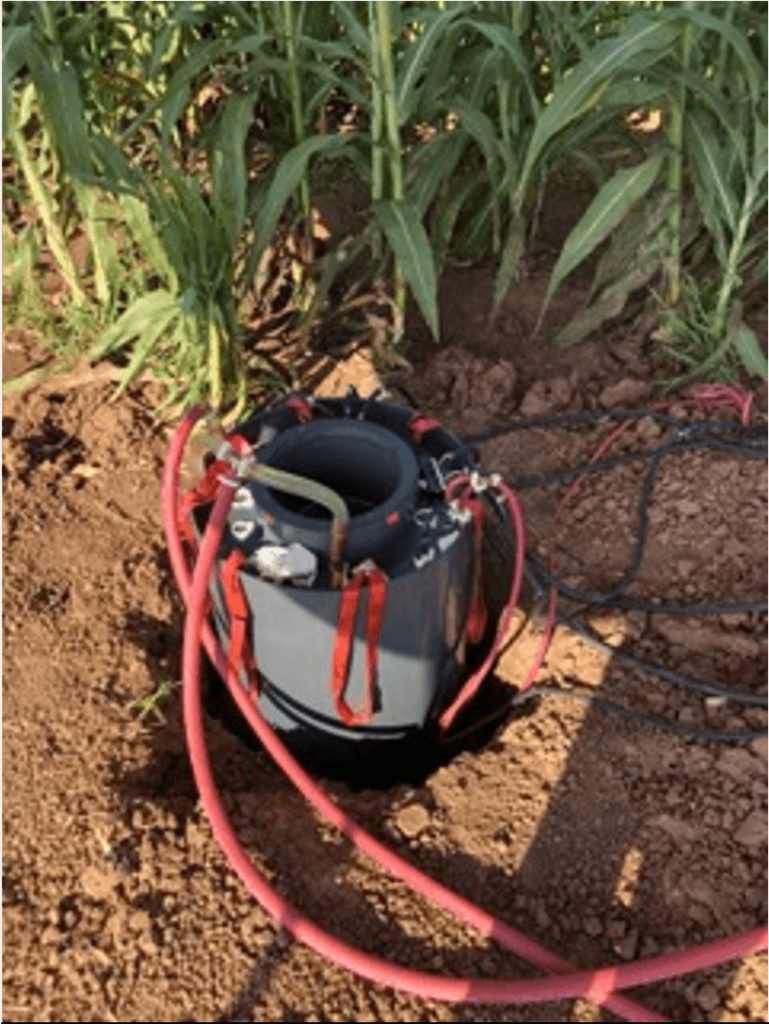
The architecture of plant roots influences many important functions, such as water and nutrient uptake. Root system architecture reflects the interaction of the genetic makeup of the plant with its environment. Characterizing this interaction (i.e., “root phenotyping”) provides critical information to plant breeders for developing new crop varieties that have improved drought tolerance, greater root biomass, and greater nutrient use efficiency. Phenotyping roots in the natural environment is important for understanding the impact of soil on how plants express their genetics. Imaging plant roots in undisturbed soil is very challenging, especially in soils with high clay content. A project that included SHI’s Chief Scientific Officer, Dr. Cristine Morgan, has been developing a field-scale device that can image these plant roots in natural soils – a mobile low-field Magnetic Resonance Imaging (LF-MRI) Rhizotron. This LF-MRI works on similar principles as the MRI machines used in human health. Figure 1 shows the LF-MRI in the field.
The project demonstrated that the LF-MRI Rhizotron works for root visualization and quantification. The research team from SHI, Texas A&M AgriLife Research, ABQMR Inc., Martinos Center for Biomedical Imaging, Harvard Medical School, and the National Institute of Standards and Technology found that the LF-MRI worked well for visualizing roots in moderate to high clay soils, demonstrating the potential for this technology; however, the broad application of this platform is a challenge because of the long scanning time needed to obtain 3D images. To address those challenges, the team is working to further improve the technology by increasing the magnetic field strength, resulting in faster scan times and higher resolution images. Figure 2 shows two root crown images produced by the new superconducting LF-MRI Rhizotron. Figure 2.A is an image of a sorghum root system that is 41 days old planted in a clay soil. Figure 2.B shows a slice of the image or a “bird’s eye” view of the root system. Figures 2.C and 2.D are corresponding images showing a sorghum root system of the same age grown in a sandy soil. This preliminary data is very promising, showing clear improvement in data quality and vast improvements in scanning time compared to the first system. This promising new technology for imaging undisturbed roots can open new insights about the structure of plant roots in soil and how plants and soil interact.
Read the publication here: http://dx.doi.org/10.1002/ppj2.20038
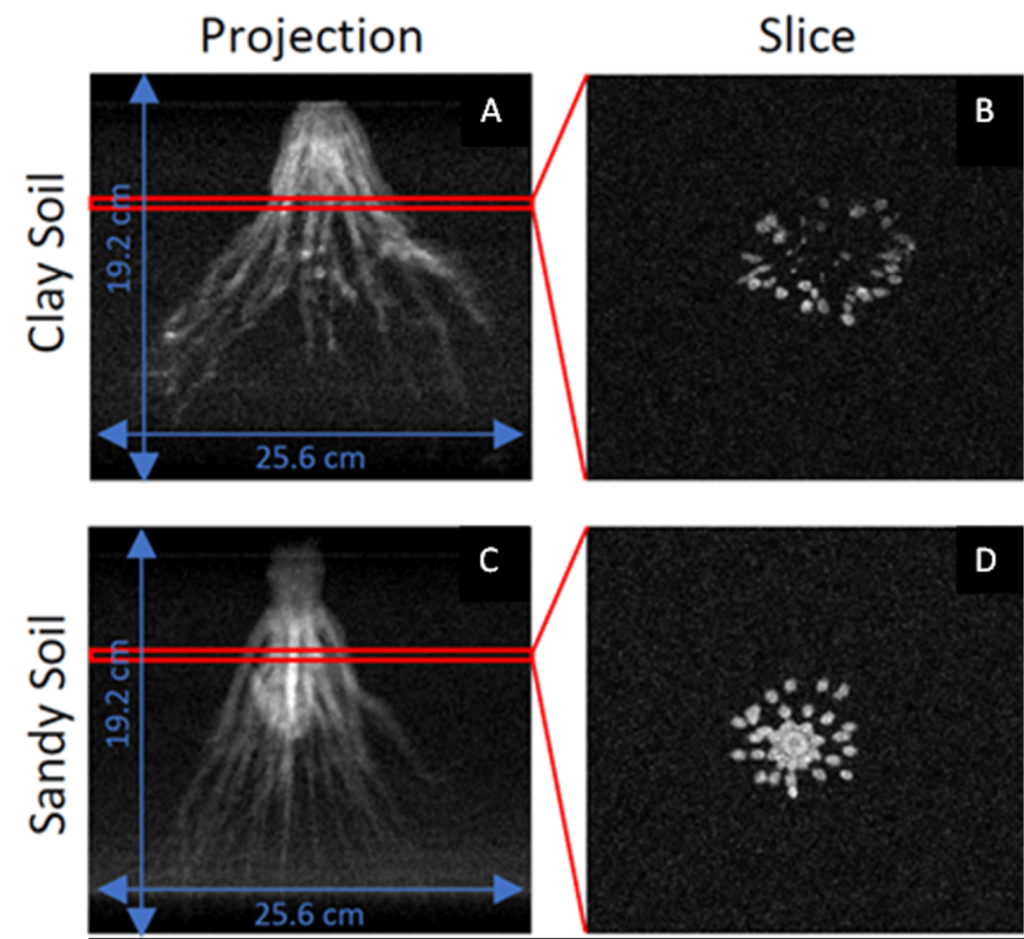
Phenotyping roots in the natural environment is important for understanding the impact of soil on how plants express their genetics, but imaging plant roots in natural conditions is very challenging, especially in soils with high clay content
VF Foundation Joins U.S. Regenerative Cotton Fund
Morrisville, NC, April 11, 2022. The VF Foundation announced today that it will join the Soil Health Institute’s (SHI) U.S. Regenerative Cotton Fund (USRCF) as a Sustaining Supporter. The USRCF is a unique, farmer-facing, science-based initiative designed to support long-term, sustainable cotton production in the United States, with the goal of eliminating one million metric tons of carbon dioxide equivalent (CO2e) from the atmosphere by 2026.
“The VF Foundation is excited to continue its support of the Soil Health Institute and join the U.S. Regenerative Cotton Fund,” said Gloria Schoch, Executive Director, The VF Foundation and Director of Global Impact, VF Corporation. “This initiative complements our corporate efforts to advance regenerative agricultural practices by taking a farmer-centric approach to scale these practices and measure their impacts when growing cotton, a key material used by VF brands and across the apparel industry.”
The VF Foundation’s support of the USRCF directly contributes to the Institute’s efforts in Texas, where approximately 60% of U.S. cotton is grown. Support will help establish farmer-to-farmer mentoring networks, conduct economic analysis of regenerative soil health systems, increase access and opportunity for minority students in scientific leadership positions, and establish Soil Health and Soil Carbon Targets so growers know how healthy their soils can become and how much carbon they can draw down. In 2019, VF Corporation set ambitious science-based targets and is committed to sourcing 100 percent of its top 9 materials from regenerative, responsibly sourced renewable or recycled sources by 2030, as a key pathway to achieve its climate goals.
“We are grateful for The VF Foundation’s past support that served as a catalyst for establishing the USRCF to assist cotton farmers and their advisors across the U.S. with building resilience to drought and mitigating the effects of climate change,” said Dr. Cristine Morgan, Chief Scientific Officer and leader of the U.S. Regenerative Cotton Fund. “Widespread adoption of regenerative agricultural practices is hindered by lack of information on the business case, locally relevant education programs and grower networks, and locally established Soil Health and Carbon Targets. These measures can arm growers with specific knowledge to demonstrate how much their soil health can improve and how that healthier soil can translate into drought resilience, yield stability, profitability, and drive additional benefits.”
The USRCF works to unite the interests of farmers, partners, and financial supporters around soil health as the foundation for regenerative agriculture. The Fund was initiated in 2021 with a founding grant from the Ralph Lauren Corporate Foundation to the Soil Health Institute.
Participating partners of the Fund include Cotton Incorporated, National Cotton Council, and Field to Market.
To learn more about the U.S. Regenerative Cotton Fund visit https://soilhealthinstitute.org/usrcf/ or contact Byron Rath at brath@soilhealthinstitute.org.
About the VF Foundation
The VF Foundation is the private grantmaking organization funded by VF Corporation, one of the world’s largest apparel, footwear and accessories companies with iconic brands including Vans®, The North Face®, Timberland®, Smartwool®, JanSport® and Dickies®. With its partners, The VF Foundation strives to innovate and problem-solve in collaborative ways to drive transformative, lasting change with the vision of creating a more equitable and sustainable world. Established in 2002, the Foundation has granted nearly $60 million globally to meaningfully improve the communities where VF operates. It’s committed to driving movements for the betterment of people and the planet across its key strategic pillars: championing Worthy Work, embracing Outside Matters, empowering creativity and self-expression as we are Free to Be, and supporting Disaster Relief and Recovery. Learn more at https://www.vfc.com/responsibility/the-vf-foundation.
About the Soil Health Institute
The Soil Health Institute is a global non-profit with a mission of safeguarding and enhancing the vitality and productivity of soils through scientific research and advancement. The Institute brings together leaders in soil health science and the industry to conduct research and empower farmers and other landowners with the knowledge to successfully adopt regenerative soil health systems that contribute economic and environmental benefits to agriculture and society. The Institute’s scientific team holds doctorates in various soil science and related disciplines, with specialties in carbon cycling, nutrient cycling, water cycling, nutrient management, farmer and adviser education, ecosystem services, soil-plant relationships, on-farm economics, and others. The Institute’s programs are guided by a comprehensive strategy for advancing adoption of regenerative soil health systems, as briefly described in this 5-minute video. Healthy soils are the foundation for restoring our land. Together, we can create a secure future for all, mitigate the effects of climate change, and help farmers and organizations meet production and environmental goals at scale. Visit www.soilhealthinstitute.org to learn more, and follow us on YouTube, LinkedIn, Twitter, and Facebook.
For media inquiries, contact Rivers Agency: info@riversagency.com
(919.932.9985)
Impact of Agricultural Inputs on Soil Health: Assessing Farmer Interest
Morrisville, NC, April 8, 2022. Farmers around the world are increasingly focused on improving the health of their soils. This interest is well-placed because healthy soils generally have more plant-available nutrients, are more drought resilient, more disease suppressive, and more profitable. Management systems that improve soil health also benefit the environment by sequestering more carbon, reducing greenhouse gas emissions, reducing nutrient runoff and leaching, and even providing habitat for pollinators and other wildlife. As more farmers invest to improve the health of their soils, questions are arising as to how agricultural inputs impact soil health.
To assess the level of farmers’ interest in this topic, the Soil Health Institute partnered with Trust In Food™, Farm Journal’s sustainable ag division, in using a combination of survey questions, analysis of published content, and tracking farmers’ engagement with articles on the topic posted to AgWeb. The survey was sent to 10,000 U.S. farmers who operate at least 100 acres and included:
- 3,500 corn/soybean farmers,
- 3,500 wheat/barley/oat farmers,
- 1,500 cotton/peanut farmers, and
- 1,500 fruit/vegetable (specialty crop) farmers.
Notably, 66% of respondents said they are interested in the impact of agricultural inputs on soil health. When those farmers were asked to rate their interest in the effects of manures, pesticides, biologicals, or fertilizers; 62% responded that they are interested in all of those inputs.
Analyzing the level of information consumed by a random sample of 10,000 AgWeb users showed that those farmers who are interested in both agricultural inputs and soil health consume 34% more digital information than the whole group, operate 446 more acres, and have a median income $144,410 greater than the whole group. In addition, 45% of these farmers are early adopters of conservation practices (which is 25% higher than the entire group).
“This analysis clearly shows that many farmers are interested in how different agricultural inputs impact the health of their soils,” said Dr. Wayne Honeycutt, President and CEO of the Soil Health Institute. “To serve these farmers, our next step is to assess the state of the science so we can determine what is currently known and identify any critical gaps that need to be addressed.”
The full report can be found here.
About the Soil Health Institute
The Soil Health Institute is a global non-profit with a mission of safeguarding and enhancing the vitality and productivity of soils through scientific research and advancement. The Institute brings together leaders in soil health science and the industry to conduct research and empower farmers and other landowners with the knowledge to successfully adopt regenerative soil health systems that contribute economic and environmental benefits to agriculture and society.
The Institute’s scientific team holds doctorates in various soil science and related disciplines, with specialties in carbon cycling, nutrient cycling, water cycling, nutrient management, soil microbiome, farmer training, education, GIS, ecosystem service modeling, soil-plant relationships, on-farm economics, and others. The team follows a comprehensive strategy for advancing adoption of regenerative soil health systems, as briefly described in this 5-minute video.
Healthy soils are the foundation for restoring our land. Together, we can create a secure future for all, mitigate the effects of climate change, and help farmers and organizations meet production and environmental goals at scale. Visit www.soilhealthinstitute.org to learn more and follow us on LinkedIn, Twitter, and Facebook.
About Trust In Food
Trust In Food is a purpose-driven division of Farm Journal dedicated to mainstreaming and accelerating the transition to more sustainable and regenerative ag practices, making every dollar invested in conservation agriculture more impactful. We bring business intelligence to agricultural production behavior change: helping farmers understand, want, and feel capable of undertaking practice change through data science, social research and strategic communications deployed through the omnichannel Farm Journal platform in collaboration with our partners. Visit www.trustinfood.com to learn more.
For media inquiries, contact Rivers Agency:
info@riversagency.com
(919.932.9985)
Impact of Agricultural Inputs on Soil Health: Assessing Farmer Interest
Introduction
Farmers around the world are increasingly focused on improving the health of their soils. This interest is well placed because healthy soils generally have more plant-available nutrients, are more drought resilient, more disease suppressive, and more profitable. Management systems that improve soil health also benefit the environment by sequestering more carbon, reducing greenhouse gas emissions, reducing nutrient runoff and leaching, and even providing habitat for pollinators and other wildlife. As more farmers are investing to improve the health of their soils, questions are arising as to how agricultural inputs impact soil health. To determine the level of interest in this issue by farmers, this project was conducted with the following objective:
Objective
To assess U.S. farmers’ interest in the impact of agricultural inputs on soil health.
Approach
The Soil Health Institute partnered with Farm Journal’s Trust in Food to assess farmer interest in this topic using three different approaches, namely, a mobile message survey, content consumption analysis, and engagement tracking of custom content, as detailed below.
- Survey – A mobile message survey was sent to 10,000 U.S. farmers operating 100 or more acres. The survey was distributed to:
- 3500 corn/soybean farmers,
- 3500 wheat/barley/oat farmers,
- 1500 cotton/peanut farmers, and
- 1500 fruit/vegetable (specialty crop) farmers.
The first question asked in the survey was: “Are you interested in knowing the impact of agricultural inputs
on soil health?” For those answering “Yes”, two follow up questions were asked:
- Which inputs are you most interested in learning about its impact on soil health?
- Biologicals
- Fertilizers
- Manures
- Pesticides
- All of the above
- What do you grow or raise on your farm?
- Row crops
- Specialty crops
- Livestock
- Livestock and crops
For those answering “No”, the only follow up question asked was which crops they grow on the farm.
- Content Consumption – To assess the levels that readers are consuming information related to agricultural inputs, soil health practices, and an overlap between the two; lists of keywords were developed for both content categories and analyzed across a random sample of 10,000 AgWeb users. The keywords for each content category were:
Agricultural Input Keywords Soil Health Keywords fertilizer chemical(s) no-till water holding capacity pesticide foliar minimum till biology herbicide acephate conservation tillage microbiology fungicide chlorpyrifos cover crops density insecticide flutifol soil organic matter erosion N, nitrogen mancozeb carbon compaction P, phosphorus chlorothalonil nitrification crusting K, potassium dicamba nitrate soil-born disease potash glyphosate bacteria infiltration sulfur glufosinate fungi earthworms phosphate ammonium nematode microbial activity anhydrous 2,4-D nutrient management enzymes biologicals atrazine soil fertility manure propazine soil health litter simazine - Engagement Tracking – The third tactic used to assess farmer interest was to create written content on the impacts of agricultural inputs on soil health and track reader engagement with that content. Our partner, Farm Journal, wrote two articles entitled “Crop Inputs and Soil Health: How Do They Interact?” and “How Does Conservation Ag Impact Soil Health and Farm Economics?” Both articles were published on AgWeb and in Farm Journal newsletters. Farm Journal personnel then tracked the number of page views and time spent on each page.
Results
- Of the 10,000 farmers surveyed, 969 responded, for a response rate of 9.69%.
- 66% of farmers responding said “Yes”, they are interested in the impact of agricultural inputs on soil health, while 34% said they are not.
- Of the farmers interested in this topic, 5% were most interested in learning about the impacts of manure, 7% were most interested in learning about the impacts of pesticides, 12% were most interested in biologicals, 14% were most interested in fertilizers, and 62% were interested in all categories of inputs.
- Those interested in the effect of agricultural inputs were nearly equally divided between Row Crop farmers (44%) and Livestock and Crop farmers (43%), while those not interested in this topic were also predominantly Row Crop farmers (53%) and Livestock and Crop farmers (38%).
- Analyzing the levels of information consumed by a random sample of 10,000 AgWeb users showed that those farmers who are interested in both agricultural inputs and soil health consume 34% more digital information than the whole group, 45% are early adopters (which is 25% more than the whole group), operate 446 more acres than the whole group, and have a median income $144,410 greater than the whole group.
- Farmers were very interested in the interaction between agricultural inputs and soil health.

Summary & Conclusion
With interest in soil health and regenerative agriculture continually increasing among farmers, food and beverage companies, environmental groups, and agricultural commodity organizations, the Soil Health Institute partnered with Trust in Food to assess U.S. farmers’ interest in the impact of agricultural inputs on soil health. Trust in Food used a combination of survey questions, analysis of published content on the topic, and tracking farmers’ engagement when articles on the topic were posted to AgWeb. The survey was sent to 10,000 farmers across the U.S. who operate at least 100 acres. Notably, 66% of respondents said they are interested in the impact of agricultural inputs on soil health, and when those farmers were asked to rate their interest in the effects of manure, pesticides, biologicals, or fertilizer; 62% responded that they are interested in all of these inputs. Those farmers expressing an interest in both soil health and agricultural inputs were generally found to be early adopters that consume more digital information, operate more farm land, and have a higher median income than other farmers.
Soil Health Goal Setting
The “regeneration” in regenerative agriculture refers to the transformations that take place when soil is managed as a living ecosystem. For example, a soil that is undisturbed and has more continuous living roots will begin to show improvements in structure, as organic residues from plants and microbes glue mineral particles together into aggregates. Well-structured soils feature a wide range of micro-habitats and, consequently, can support a greater diversity of soil organisms. These organisms’ life cycles improve conditions for plant growth (e.g., aeration by earthworms and enhanced nutrient availability due to microbial decomposition of organic matter), leading to further improvements in soil structure and biological activity.
“A question worth asking early in the regenerative agriculture journey is: how far can these transformations go? Or, in other words, how much healthier can a soil get?”
Given that these transformations can be gradual and different management strategies can be used to achieve desired changes, a question worth asking early in the regenerative agriculture journey is: How far can these transformations go? Or, in other words, how much healthier can a soil get? To explain how the Soil Health Institute is helping farmers and their advisors answer this question, we’ll look at how we quantify both current and potential soil health.
Vital Signs of Soil Health
The concept of soil health refers to a soil’s ability to perform the multiple jobs it is expected to do, including providing crops with water and nutrients, reducing runoff and erosion, and storing atmospheric carbon fixed by plants through photosynthesis. These different functions depend on soil physical, chemical, and biological properties, so assessing soil health is a fundamentally multifaceted task.
Soil scientists often measure soil health indicators to make a comprehensive assessment of soil functioning. Understanding how much organic matter is present in the soil is particularly important, as organic matter plays a central role in multiple soil functions. Organic carbon measurements provide a direct indicator of organic matter content because organic matter is >50% carbon by weight. Measuring soil organic carbon content also makes it possible to estimate organic carbon storage per unit area if bulk density, sample depth, and rock content are also known. Aggregate stability, or the ability of soil aggregates to withstand applied disruptive forces, is a reliable metric for soil structure and resistance to erosion. Additional insights into soil structure can be gained by measuring soil water-holding capacity, saturated hydraulic conductivity, and compressive strength. The biological dimensions of soil health can be assessed using proxies for microbial activity, including enzyme activities, permanganate-oxidizable carbon (“active carbon”), and respiration during laboratory incubation (“potential carbon mineralization”). When evaluated together, soil health indicators give a snapshot of soil health status for integrated assessment of management outcomes. Diagnosing specific soil properties limiting crop growth may require additional measurements.

Your Soil on a Scale: Setting a Benchmark
Interpretation of each soil health indicator requires defining what values are ideal. Soils can exhibit different ranges of indicator values depending on site characteristics, including precipitation, temperature, soil types, and topographic position. An organic carbon concentration of 1.5% may be very high for a soil on a sandy hilltop, but relatively low for a neighboring soil in a clay-rich depression, both under the same management. Differences in inherent properties (i.e., texture and topographic position) give these soils different capacities to store organic carbon.
How can we determine different soils’ potential soil health? First, we need to clarify what we mean by “different soils.” Soils are incredibly diverse due to processes that occur over hundreds to thousands of years; if no two snowflakes are identical, then certainly no two soils are. However, soils can be grouped based on natural variation in the properties that are most relevant to soil health, including texture (i.e., sand, silt, and clay content), drainage, and mineralogy. Spatial trends in these properties can be evaluated using publicly available data (e.g., USDA National Cooperative Soil Survey maps) in conjunction with in-field interpretation. These properties allow us to group soils based on potential soil health, so that soil health indicators measured on one soil can be interpreted using data for soils with similar inherent properties and site characteristics. Grouping soils according to the inherent properties relevant to soil health makes it possible to link soil health indicator values to differences in management, rather than natural variation across sampling locations.
“Soil health indicator values under optimal management for soil health are referred to as Soil Health Benchmarks.”
The potential soil health of each group of soils can be established by measuring soil health indicators under management conditions that exemplify the soil health principles, including minimal soil disturbance, continuous living roots, and physical protection of the soil surface. In many landscapes, perennial vegetation may provide the best reference for the capabilities of a soil health group after long-term implementation of the soil health principles. Soil health indicator values under optimal management for soil health are referred to as Soil Health Benchmarks. Soils under row crops are not expected to achieve 100% of benchmark values, as some degree of disturbance is unavoidable in crop production. However, standardizing soil health measurements relative to Soil Health Benchmarks provides a consistent basis for comparing soils with different inherent properties.
Unlocking Your Soil’s Potential
Once you’ve measured your current soil health and compared it to what your soil is capable of, you have the data you need to set achievable goals for management outcomes. Integrated assessment of physical, chemical, and biological soil health indicators, relative to Soil Health Benchmarks, can point to the management changes that will most likely lead to the greatest improvements in soil functioning. For example, if aggregate stability is high but biological activity (e.g., active carbon or carbon mineralization) is low, disturbance may be minimized enough to develop soil structure, but greater organic matter inputs may be necessary to stimulate the soil microbial community. The experiences of farmers with similar soils and the advice of trusted local advisors are invaluable resources for developing the specific management strategies that will move you towards your Soil Health Benchmarks.
“Once you’ve measured your current soil health and compared it to what your soil is capable of, you have the data you need to set achievable goals for management outcomes.”
Studying the Economics of Regenerative Soil Health Management Systems in Cotton Production
Farmers are businesspeople and one of the first pieces of information asked by farmers and crop consultants considering a transition to soil health practices is, “What is the business case for adopting soil health practices?” Because of this question, research and communication related to on-farm economics is a key component of the U.S. Regenerative Cotton Fund. Regenerative soil health management has been shown to reduce inputs and increase crop yield and resilience. The Soil Health Institute interviewed 100 corn and soybean farmers and used partial budget economics assessments to document the costs and benefits associated with regenerative soil health management practices. Interviewed farmers are located across nine states and the interview results found that soil health improves net farm income. Of the farmers interviewed, 97% reported increased crop resilience to extreme weather and 67% reported higher crop yield. These 100 farms were primarily in Midwestern states and were mostly growing corn and soybeans, so even though substantial improvements in net farm income were found (increased net farm income by an average of $52/acre for corn and $45/acre for soybean), more work is needed to map out the business case for cotton production systems by region.
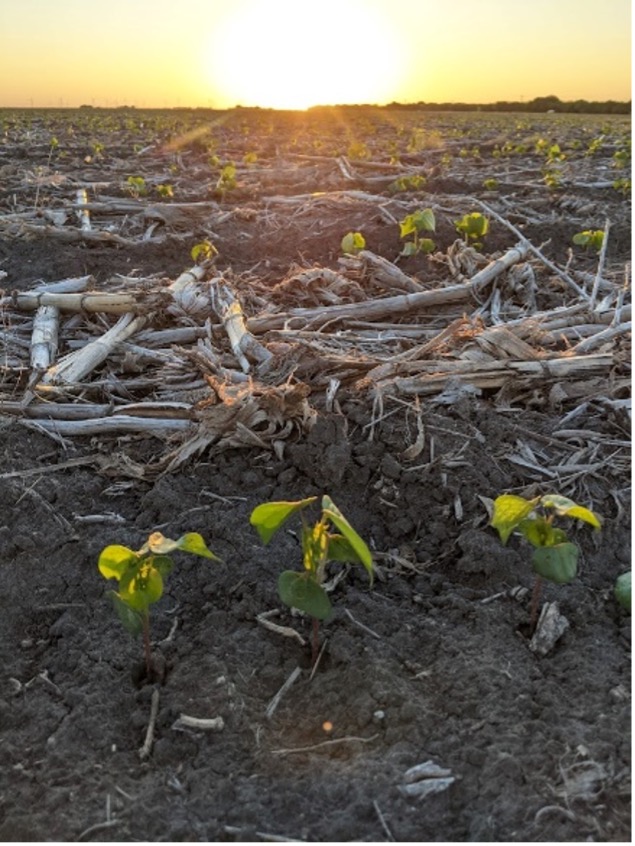
“Regenerative soil health management has been shown to reduce inputs and increase crop yield and resilience.”
Because 85% of corn and soybean farmers had increased profitability from using regenerative soil health management versus conventional management, there is reason to believe cotton systems will also be more profitable with better soil health. There are many unanswered questions regarding the regionality of profitability for soil health practices and the importance of increasing yield in regenerative soil health management of cotton. Locally based economic information is needed for cotton production so that it can be used to evaluate the risks and benefits of adopting regenerative soil health management.
As a part of the U.S. Regenerative Cotton Fund, the Soil Health Institute will assess the economics of cotton producers implementing regenerative soil health management and also cotton producers that are just transitioning to regenerative soil health management. The economic results of farmers who have adopted regenerative soil health management systems can help others adopt and will be reported through state-based producer networks and incorporated into the Healthy Soil for Sustainable Cotton training programs. In this way, farmers can work together to create cotton production systems that are more regenerative and profitable.
“…farmers can work together to create cotton production systems that are more regenerative and profitable.”