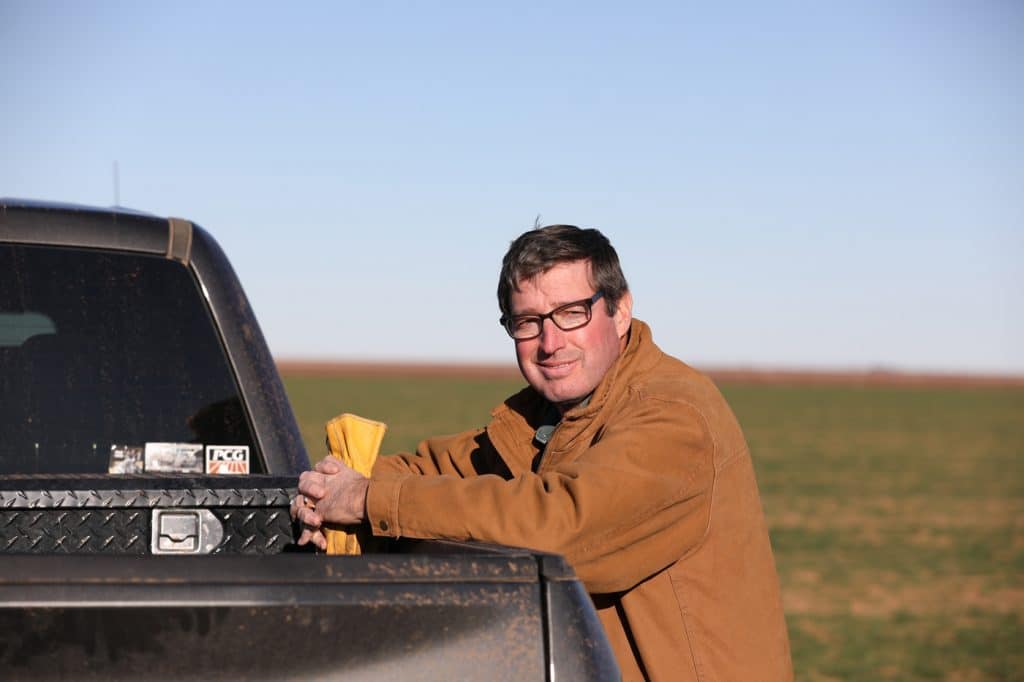
Soil health helps Barry Evans boost profitability and make the most of limited water
Cotton grower Barry Evans didn’t think he’d come back to the farm after college, but after more than a decade away, he found himself missing farm life. The West Texas operation he returned to, however, wasn’t the same as when he left. Wind was carrying away the topsoil, and water was becoming scarce. It was time for a different approach.
“Things changed a lot as our Ogallala Aquifer declined. The big question we had is how we’d go on farming in West Texas without irrigation water. Conservation farming is to allow us to capture rainfall and improve water infiltration. That’s really the way we’re going to make it: You’ve got to capture rainfall and not let it get away.”
How it started
“I came back to the farm in 1992 and in 1996 and I start managing for dirt storms. We were full tilling like everyone was. I saw the research on no-till and got interested in it. We’ve seen such a change. It has helped with the dirt storms, but also with so much more than what I planned when I started.”
What’s working?
No-till cotton helped keep Evans’ soil in place, but when he started rotating grain sorghum, he began to see his soil improve and was able to reduce his irrigation to just 600 of his 4,500 crop acres. “We started seeing the benefits of both water capture and helping our water infiltration rate. We like to stabilize our yield, but it’s just really hard with our erratic weather. We found out that capturing rainfall and having a residue on the ground really helps. It’s giving me hope for the future without irrigation.”
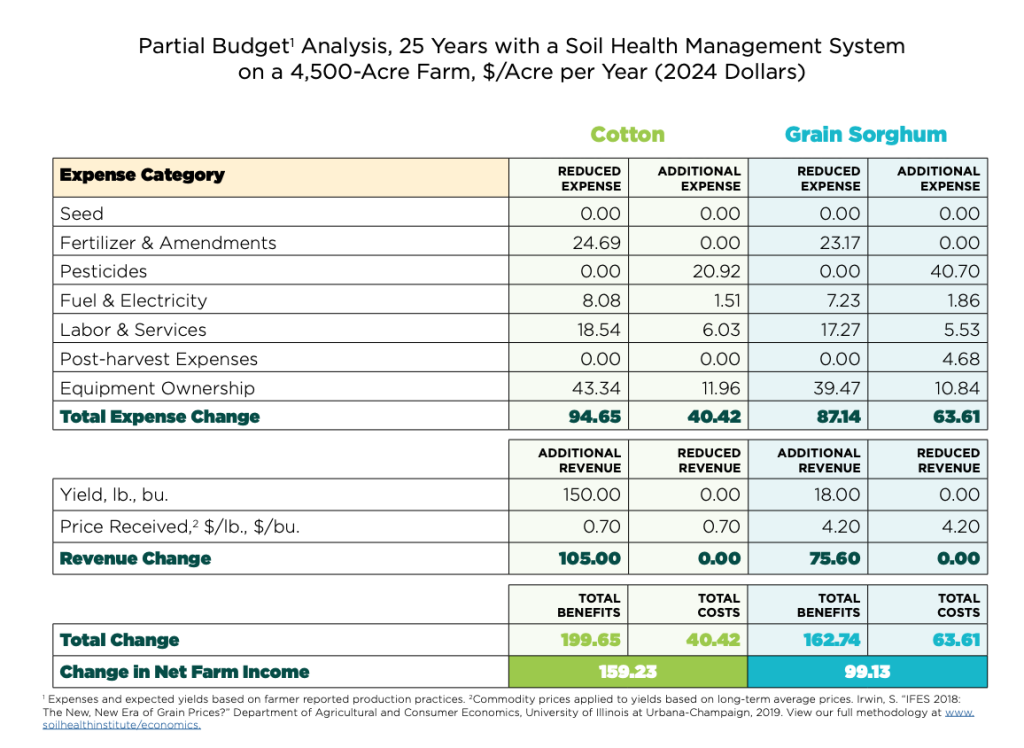
Over time, the changes also reduced production costs and increased yields, boosting profitability. Net farm income increased $159/acre for cotton and $99/acre for grain sorghum due to soil health practices.
Here’s a closer look at how those changes improved Evans’ bottom line:
What he learned the hard way
“You’ve got to kill weeds early. It’s so critical to our farming operation because our moisture is so valuable. If you wait on herbicide, it will cost you more money in the end.”
His advice
“It’s probably not as hard as you think it is. When I first started, I bought a drag planter because I thought I needed lots of weight and I bought a heavy planter coulter and row cleaners and all kind of stuff I thought I would need. It is really not that complicated. You just don’t need all the extra tools you think you do.”
Want to know what managing for soil health can do for your operation?
Here are three things you can do today:
- Download our printable fact sheet for full details on this farm’s profitability analysis
- Explore more of our profitability research
- Reach out to one of our soil health educators, technical specialists, or farmer mentors