Healthy soils benefit farmers, ranchers, and the environment, but sustainability can’t exist without profitability. At the Soil Health Institute, we show how practices like reduced tillage, rotational grazing, and cover cropping can improve profitability through reduced expenses and improved yield. We’re also studying the economics of transitioning to managing for soil health, so growers, suppliers and brands know what to expect as producers implement and refine management changes.
Soil Health and Profitability
We evaluate the business case for adopting soil health practices, providing producers and advisors with real-world costs and benefits to inform their management decisions.
Overview
Highlights
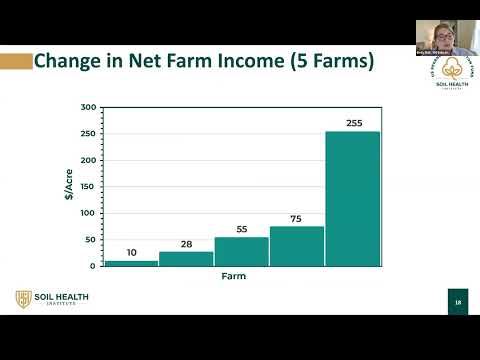
$118/acre
average net income increase for cotton across 41 farms in 8 states
$65/acre
average net income increase for diverse systems across 29 farms in 20 states
$52/acre
average net income increase for corn on 100 farms in 9 states
$45/acre
average net income increase for soybean on 100 farms in 9 states
Resources
Filter by:
Applied Filters
Loading…


Contacts
Applied Filters
Loading…




















FAQs
We’ve seen that when our essential soil health indicators improve, yield improves, too. But even without factoring in yield, cost savings from reduced fuel, fertilizer, and labor can make an operation more profitable. Once established, regenerative practices also reduce financial and supply-chain risk by increasing resilience to drought, heat, extreme rainfall, and reduced dependence on synthetic inputs.
It can take several years for growers to see increased net farm income as they refine their practices, implement them across their operations, and improve their soil health, especially in regions where the practices are less common. The pace of improvement in our essential soil health indicators also varies across soil types, regions, and practices. To get an idea of what healthy indicator values look like in a region or soil type, explore our benchmarking reports.
Premiums, practice payments, long-term contracts, favorable loan or insurance rates, equipment access and cost-sharing can help derisk the transition. Funding SHI’s work also helps growers toward long-term adoption through efforts including profitability research; accessible, affordable measurements; and free advice from our educators, farmer-mentors and technical specialists.
For our statewide and individual economic reports, our data comes directly from conversations with producers who have been implementing soil health practices on their own farms for five years or more. A Soil Health Educator works with our Agricultural Economist to conduct an economic interview and gather data. Each interview consists of structured questions to gather farm characteristics and management details and open-ended discussions to gather comparative data between soil health and conventional practices for the same crop(s) in the same geography.
Savings include reduced pesticide expenses as beneficial organisms increase, reduced fertilizer costs due to better nutrient cycling, and reduced fuel and equipment expenses from less intensive tillage.

Healthy Soils Are Fundamental for
Life On Earth
Your gift to the Soil Health Institute supports the adoption of regenerative soil health systems that store carbon, reduce greenhouse gas emissions, improve water quality, increase farm profitability, build drought resilience, increase nutrient availability, provide pollinator habitat, and suppress many plant diseases. Together, in partnership with hundreds of organizations, the Soil Health Institute is addressing the needs of farmers, ranchers, conservationists, policymakers, and society by Enriching Soil, Enhancing Life.