Founding CEO and President Dr. Wayne Honeycutt Reflects on a Decade at SHI
As he prepares for retirement, the Soil Health Institute’s Founding CEO and President Dr. Wayne Honeycutt looked back on his journey at SHI, from becoming the first employee in 2016 to leading a team working globally to advance soil health. He shared his proudest moments, toughest lessons, and hopes for the future.
What made you want to take on the challenge of leading SHI?
It was just something that felt so right to me in so many ways. I’d had a career of conducting the science and then working at USDA’s NRCS to get that science translated and out in the world to benefit farmers. I realized that so many of these things that we were talking about with conservation, water quality, wildlife habitat, pollinator habitat, and climate change can be addressed through soil health. So when the opportunity came to help launch the Soil Health Institute, it just felt like the rightest thing in the world.
How did you feel when you officially got word that you would be SHI’s Founding President and CEO?
Completely elated. When you work in conservation, you realize how much that you owe to those who came before you, and that gives you a responsibility to providing for those that come after you. So much of this work at the Soil Health Institute is about preparing the Earth, not just for those that are living on it now, but those that are coming after us. It was an opportunity to embrace what gives my life meaning. Here I am on the tail end of that, and I still feel the same way every single day. I count my lucky stars. I remember the very first week, taking a trip to the Samuel Roberts Noble Foundation, the foundation that provided that financial backing to get the Institute started. I remember sitting out on the porch and looking up at the stars and thinking, ‘I cannot believe how lucky I am.’
Launching a brand new organization must have been a major shift from being part of a large established institution. How did that feel at the start?
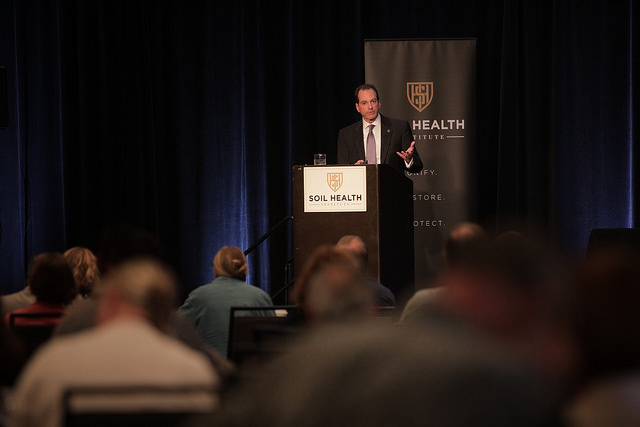
It was like being an animal let out of his cage. The landscape was wide open. I realized that there was this world of possibilities and such a huge opportunity for having impact. When you start a new organization, you realize that, hey, we get to do things the way that we think it needs to be done and we don’t have to be mired by all of the checklists. We will do things right, but we can cut right to it, conduct the science and get it immediately translated and delivered to farmers.
How did your past experiences to shape how you approached the challenge of launching SHI?
I heavily relied on my science training and background. I spent a lot of time in the National Agricultural Library researching how particular practices improve soil health, what impact they have on water quality in different soils and different climates, how they impact greenhouse gas emissions, how they impact farmers, and the best ways for measuring. That helped formulate the overall strategy. When we saw all these environmental benefits of adopting soil health practices, but then looked at the statistics on how much of the land does not use those practices, we knew we need to get more people using these practices. That’s our farmers and ranchers, they’re the ones managing all this land. And so that means we needed to think about what information farmers need to know when they’re deciding whether or not to adopt some new management practice. We know that they need to understand the business case. Is it going to increase or reduce their economic risk and their profitability? There was so little information out there on that at the time. We also know that farmers need to be able to measure their progress. We needed to focus on the right measurements. And we needed to help develop tools for farmers, and so that they can make well-informed decisions when they’re thinking about adopting these practices. That meant we needed an education program. The scientific background that I had was really critical because I was a firm believer in it, and when you’re a firm believer in something, there’s not going to be very much that stops you.
What challenges did you encounter in the beginning?
At the beginning, I was a bit naive thinking everybody’s just going to agree, this is good science, so we’ll support that. Well, that wasn’t the case. Some of the challenges at the time were getting funding, getting convergence, getting people to even talk about soil health. We knocked on a lot of doors and they weren’t opened. But we believed in what we were doing, so we kept pushing. And then as we got some doors to crack open and start to support us, we were able to start conducting the work, prove ourselves, and prove the science, and that brought in more supporters.
Was there a time you and the team achieved something people said was impossible?
Often people would say, well, what is soil health? How do we know if we’re improving it or not? And so we evaluated over 30 different measurements across the U.S., Canada, and Mexico, all those different crops and climates and soils and management practices, to help us identify the most effective ones that could be widely used. That type of work helped provide a really solid foundation for moving forward. Some of those challenges almost looked insurmountable, but we knew that was our role to help answer the big challenges. We’ve built that foundation now, and it can just take off.
You’ve overseen tremendous growth of SHI in your tenure. Can you discuss the development of the team?
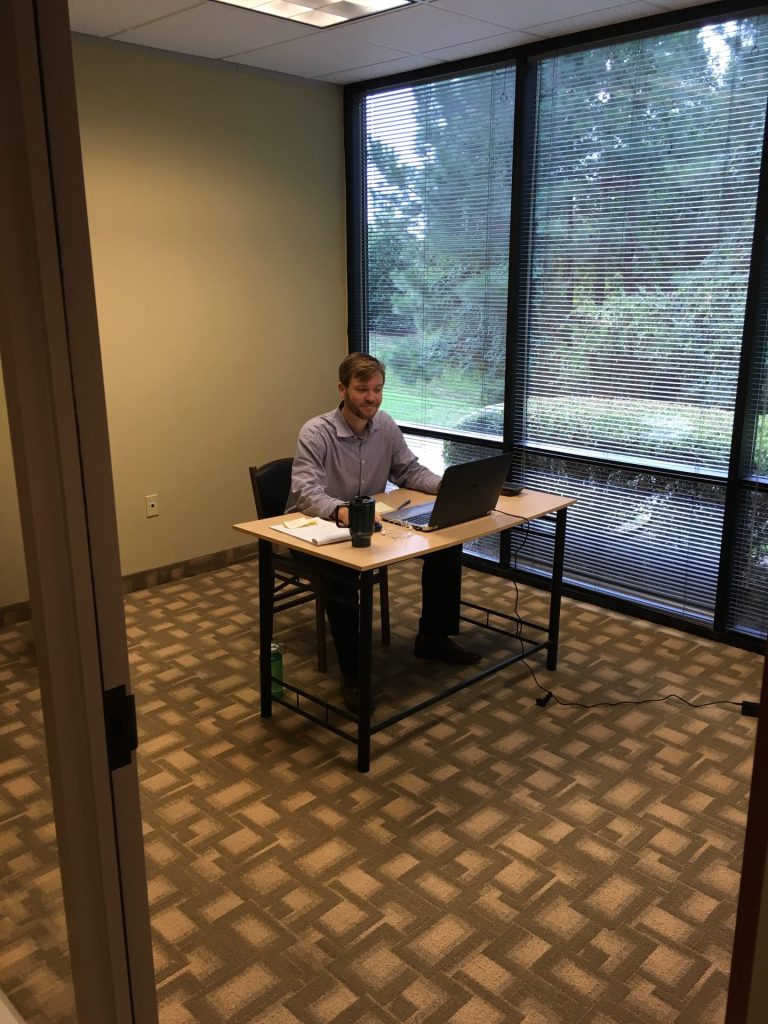
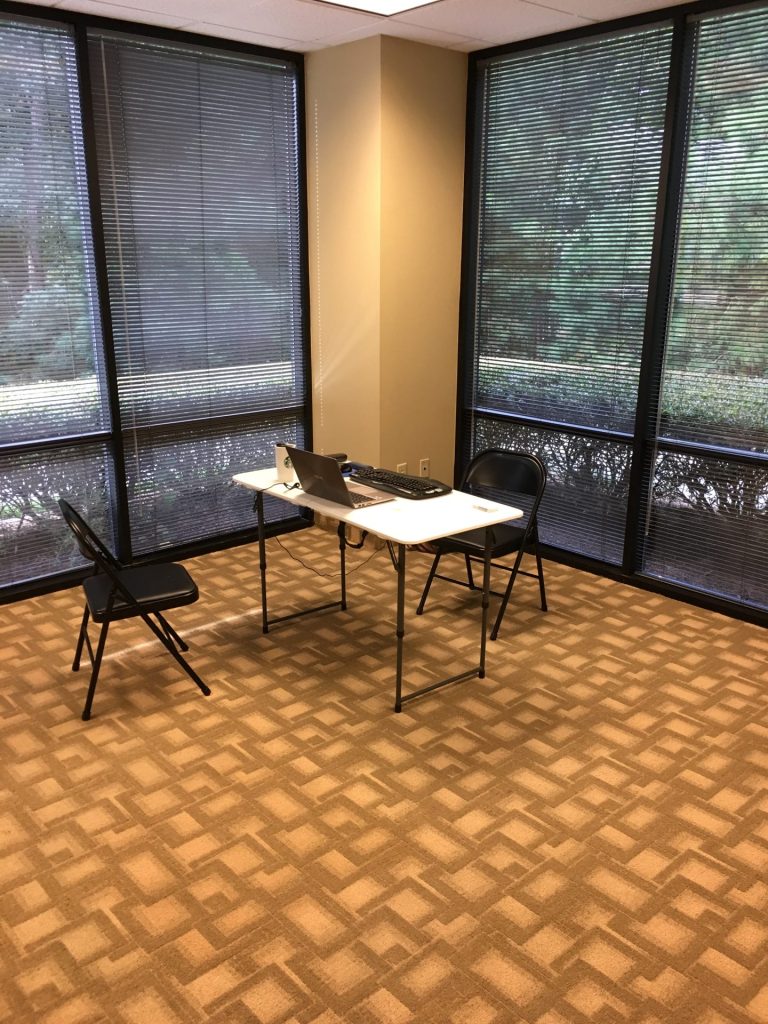
In many ways, I’m just the very fortunate beneficiary of the team’s work. I was the only employee first, and then we hired three more to get things started. We were a four-person team for the first two or three years. We were remote at first, then when we found the offices here near Research Triangle Park, just outside of Raleigh, that’s when we first came together. It was kind of comical. We had card tables, camp tables, a little computer. Now we’re in the fortunate position of having many top candidates wanting to work at SHI. About a year ago at an internal workshop, I asked, ‘What was it that brought you to the Soil Health Institute? What keeps you here?’ And the real common thread going around the table was the opportunity to have impact and to scale it up. That’s what drives so many of us: We want to make sure the work is scientifically credible, but the science is not our end game. It’s getting it out there, getting that adoption and helping farmers stay in business.
What has been the most rewarding part about building SHI?
One of the most rewarding parts is seeing the conversation change. When we started, soil health was not mainstream. Now it is much more mainstream. People are recognizing that the number one outcome of regenerative agriculture is soil health. Farmers are recognizing themselves not just as a corn or soybean farmer, but also as a soil health manager. When they focus on that, they can bring benefits to themselves, to their neighbors, to society.
What accomplishments will you look back on most fondly?
The bottom line is the people. I love seeing fellow employees challenge themselves and prove things to themselves. Working with individuals and seeing them progress in their careers has been a big part of the accomplishment. In a broader sense I do feel that the elevation of the soil health terminology and concept is one of the accomplishments I feel like we’ve had a role in here.
How did you find your way into soil health?
When I was about 10 or 11, my father purchased some farmland, so I started spending time with him out on the farm. I developed a real appreciation for for the land: As Wendell Berry describes, when you put your hand into the ground, if you leave it, your heart will ache to go back because you’ve made a marriage with your place. That was just really eye opening for me. I was basically a nature nut, so I got my first degree in forestry, but I started taking some soils classes and I’d got more and more interested in that, so I minored in soils. When I got my bachelor’s degree in forestry, there were no job opportunities. A professor offered me an assistantship to get my master’s in soils and forest soils, so I did that, and but after, with a master’s degree, I ended up laying carpet for minimum wage. I realized, this is not working. I’ve been following my passions. Maybe I should try to do something that’s not my passion, but will make me good money and I could take great vacations. So I went back to school in computer science, but it was really clear that it just was not aligned with my interests and passions. At that point, I thought, well, the only thing I’ve been halfway good at so far is school, so I’ll apply for Ph.D. programs. After a Ph.D., I was hired as a scientist for USDA’s Agricultural Research Service. I remember thinking, ‘If I don’t make the grade here, maybe they will at least keep me on as a technician.’ That’s where my confidence level was, because I hadn’t proved things to myself. My point for people starting off is, it’s not a straight line. It’s not predetermined. Stay aligned with your passions and believe that you can achieve what you want to achieve.
When you think about the soil health movement as a whole, what makes you feel hopeful?
What makes me feel hopeful is the recognition that soil health is the foundation for regenerative agriculture, the foundation for managing agricultural lands. When you focus on soil health and you are achieving so many of these other benefits, with stable yields, a stable income, and environmental benefits. Another thing that really helps me have faith in the future is the level of inspiration for the generations that are younger than me, that are excited about this work and committed to helping bring those benefits to scale.
What are you looking forward to in your next chapter?
I really want to get back to nature. I want to get a small topper for my pickup truck and build a platform for a bed and some shelves underneath it and do a lot of camping and hiking. I love being on mountaintops above the tree line, so I’m planning on doing a lot of that.
You’re working side by side with incoming CEO Ashley McKeon until your retirement this month. What are you looking forward to in Ashley’s leadership at SHI?
She has so many ideas and she’s so enthusiastic. I know she’s going to do such a great job, and everyone is so excited about her coming in. It’s a new level of energy, which is exactly the way it should be. I’m really, really happy to see that good things are in store.