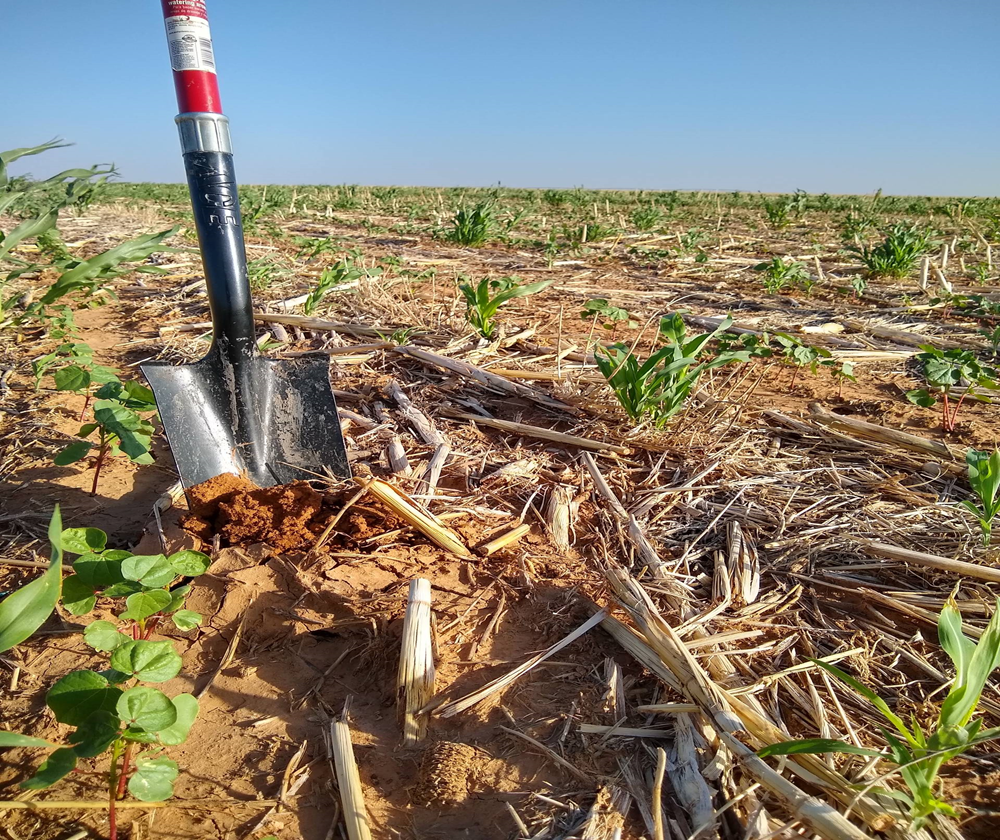
Soil health assessments are an important part of the farming toolkit and usually involve taking soil samples and sending them to be evaluated by a lab. Each sample captures a snapshot of how healthy your soil is at that moment in time, so you want to make sure the moment that you pick will give you the most useful information.
To make the most of your sampling efforts, it helps to think about timing in a few different ways. Timing within crop rotation, time of year, and the timing after weather events, as well as tillage or other management, can all affect your results. The following timing recommendations will help you get the most useful soil health information from your sampling efforts but remember: the best sample timing is the one you take!
Where you are in your rotation
In any given year, you might have fields that you’d like to sample that have different crops planted in them. Each crop and how it’s grown can have different effects on the health of your soil. As an example, if you have two fields next to each other, both in an alfalfa-corn silage rotation, and one is in its third year of alfalfa this year and the other is in corn, one may have greater soil health indicator values than the other simply because of the crop rotation you’re sampling. If you want to compare soil health between fields, keep comparisons to fields with similar crops at sampling to minimize any effects on soil health due to crop rotations.

When you sample during the crop rotation matters. The wheat field in the background and the alfalfa field in the foreground will likely have different soil health values if sampled at the same time, as they are at different points in the rotation.
Time of year
Take all your samples around the same time of year if possible. It is best practice to keep sample collection within a four-week window of each other. Collecting samples at the same time reduces natural seasonal effects, making management-related differences easier to detect.
Soil microbial activity is often lowest in the coldest or driest months, so samples collected during these periods will generally have lower carbon mineralization values compared to samples collected during warmer, wetter months. As a starting point, SHI recommends sampling in the spring after winter crop termination and before planting cash crops. If that timing doesn’t line up with your operation, sampling four weeks after planting cash crops also works well. This timing is a good balance of logistics and optimal levels of biological activity. You could also sample in the fall after harvest and before any fall tillage occurs; this is likely the best timing if you are sampling a crop like potato, where field preparation and fumigation may occur the fall before planting. If you’re already out there taking soil fertility or soil pathogen samples, that’s a perfect opportunity to add some soil health samples!
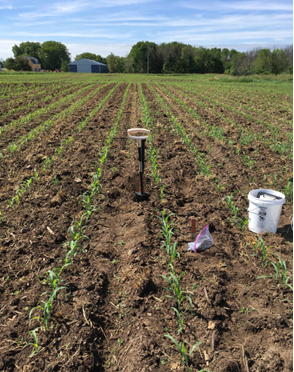
Time of the season is important for soil health sampling. Try to take samples when soil is relatively undisturbed; that might be before tillage and planting in spring, or starting four weeks after planting, as shown here.
Timing relative to management and environment
As much as you can plan to do your sampling on a particular date, weather and logistics will likely change when you can sample. Depending on field management and the environment (rainfall and tillage especially), you might want to move your sampling by a few days or weeks. Avoid sampling when fields are extremely wet or dry. This is not only because it can be physically difficult to sample, but also because soil health measurements can be affected by soil moisture. It’s best to take samples at a time where soil moisture is closer to average for that field. Tillage or any other soil disturbance can also affect soil health measurements. A good guideline is to wait two weeks after a soil-disturbing event to take any soil health samples.
What if I only plant highly disturbed crops? Should I even bother?
Yes! Soil health is relative to the cropping system and environment. You can still see differences in soil health when sampling in a root crop, for example, it might just have lower values for soil health than a less-disturbed crop on the same soil. The key is keeping your sample timings as consistent as possible to the most reliable data for you to use in your operation.
Conclusion
Soil health measurements are only as good as the sample you take, but the best sample is the one that you actually collect! These timing considerations can help you get the most useful and usable data as you continue your soil health journey.
Want to know how to choose a location for sampling? Check out our blog on 6 mistakes to avoid.
For more information on soil health, reach out to our educators.
This article is made possible by the Advancing Markets for Pacific Northwest Potatoes, Industrial Hemp, and Commodities from American Indian Reservations Project, a partnership led by Dr. Jeff Steiner at Oregon State University and funded by the USDA-NRCS. For more in this series, visit our YouTube channel.