At the Soil Health for Profitability field day, attendees had the opportunity to learn from local experts on how to incorporate cover crops into their farming operations. This field day on January 29, 2025, was facilitated by Soil Health Educator Jared Conner and SHI Technical Specialist Doug Newton in fields near Clio, South Carolina.
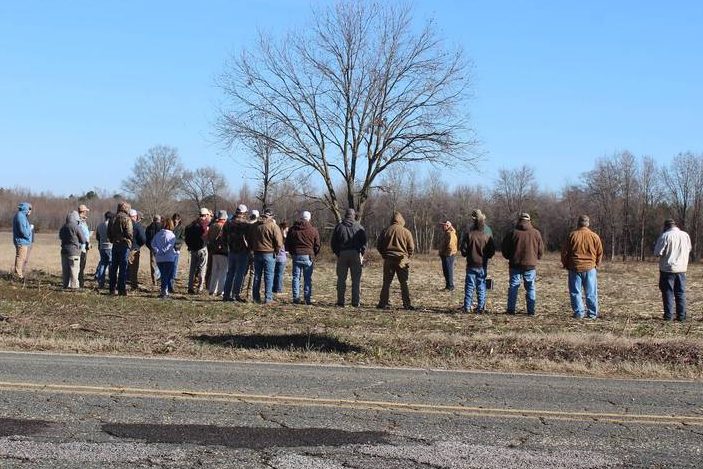
South Carolina farmer Sonny Price shared insights from one of his fields, where he uses a cover crop mix that includes tillage radish, winter pea, triticale, clover, and vetch. He explained that the use of cover crops has significantly increased organic matter in the soil, reducing his reliance on fertilizers. Additionally, they’ve helped with weed suppression, which has allowed him to use less herbicide. He also added that he does not have to subsoil anymore due to having the cover crops improve the soil, which he says saves him more than $35/acre.
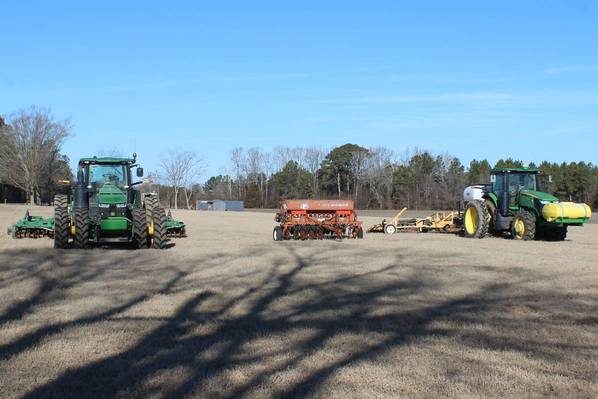
Cover crop seeding equipment was on display, which included an air seeder mounted on a turbo till, an air seeder connected to a Phillips harrow, and a no-till drill.
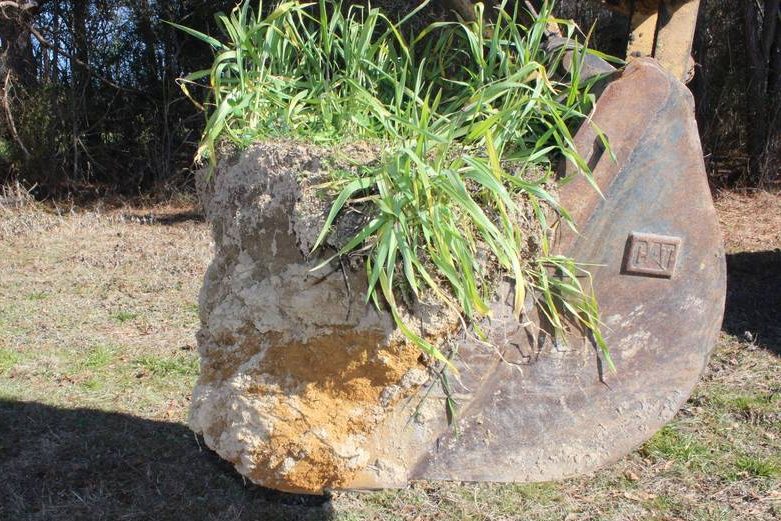
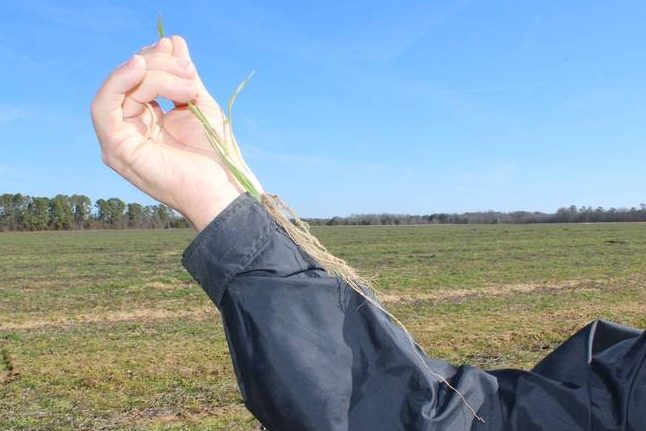
Attendees carpooled to South Carolina farmer Billy Covington’s field to see a soil profile sample in a bucket. The profile showed that cover crop roots from clover and triticale were making their way almost 30 inches below the surface through clay. Newton explained that one of the benefits of using cover crops is their ability to recycle nutrients. He’s taken biomass samples to send off for testing to determine how much fertility has been captured and recycled from the soil.
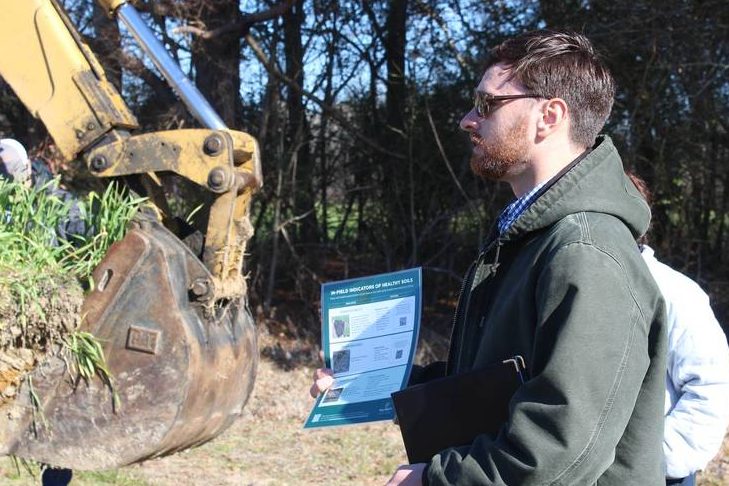
Next, Soil Health Educator Jared Conner discussed In-Field Indicators of Healthy Soils, which are soil health assessments done in the field using a shovel and your senses.
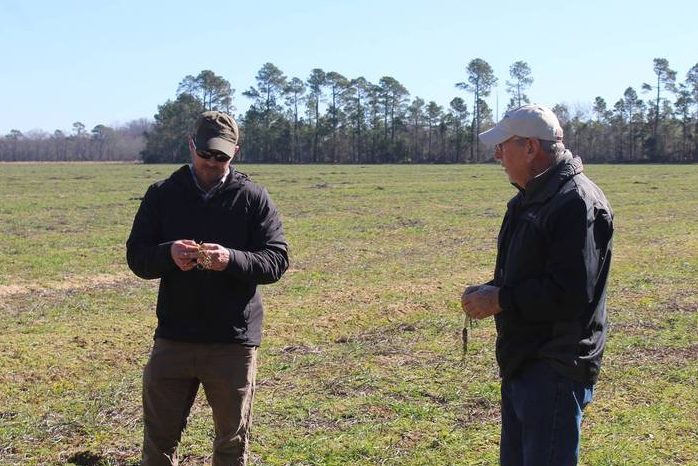
At the next field, attendees heard about SHI Farmer Mentor Pat Rogers’ experience using cover crops. Rogers mentioned years ago he had the chance to rent some underperforming ground and decided to enroll it in EQIP and plant cover crops on it for a few years. Each year his corn yield increased due to soil health management systems and now it’s one of his best performing fields.

During a shovel test, Conner compared soil from a crop field (left) to soil from a nearby fence row that is under perennial vegetation (right). By examining the color and structure of the soil, one can see how organic matter levels and aggregate stability differ between the two. Attendees learned about soil health management systems and how comparing crop field soil with perennial soil can provide valuable insights for improving soil health.
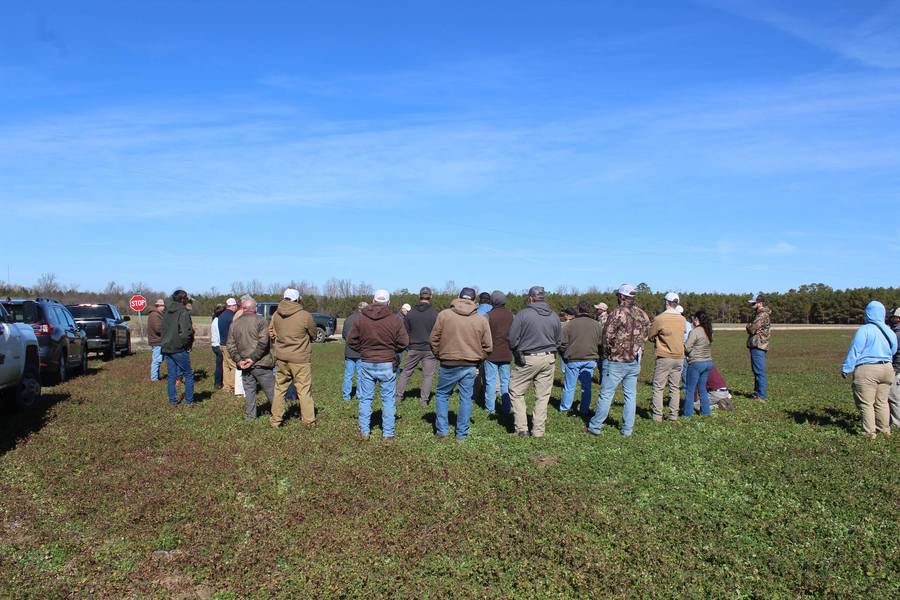
Cade Baughman, owner of Scout Seed Company, explained how they create custom cover crop mixes and strongly advocated for their use. He highlighted that these mixes offer a broader range of benefits for soil health and future cash crops, compared to single-species plantings. He cautioned that relying on one species for a cover crop limits the potential benefits, especially if weather conditions or other factors deviate from expectations.
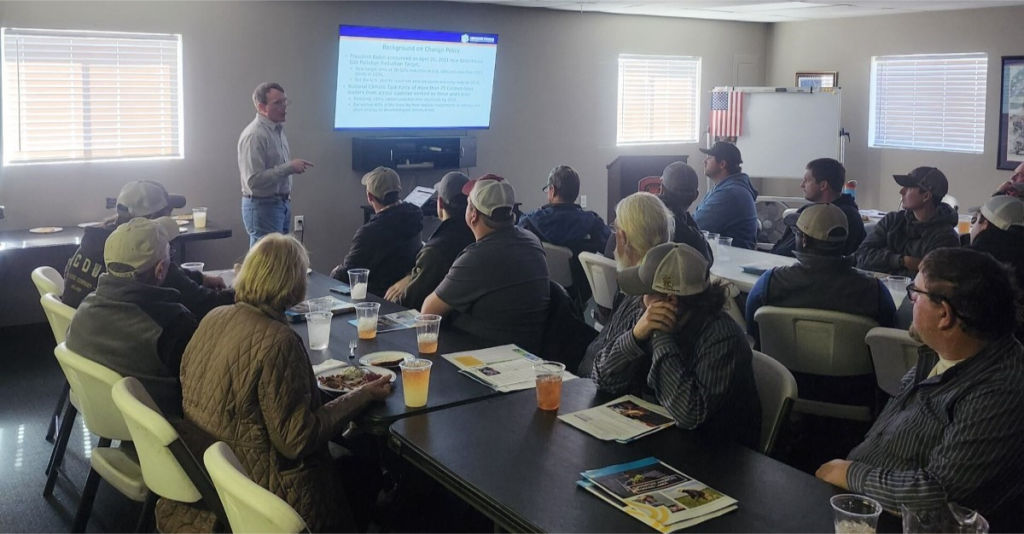
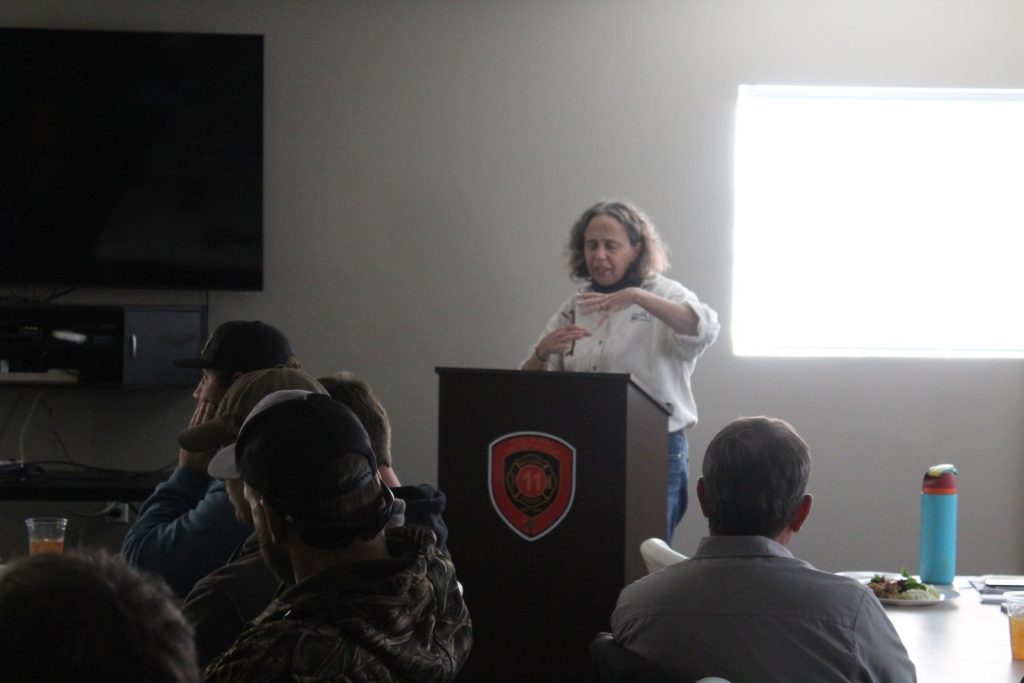
The field day concluded at the Clio Rural Fire Department Station 1 where attendees received an overview of carbon credits from Clemson Extension Dr. Nathan Smith, who explained to growers how carbon credits work and considerations when evaluating a carbon contract. NRCS District Conservationist Sue Griggs explained how NRCS programs work and how farmers can take advantage of federal programs like EQIP to help them plant cover crops.
To contact an SHI Soil Health Educator, Technical Specialist, or Farmer Mentor, please visit our Contacts page.
The Soil Health Institute will host a field day in Georgia on March 11.